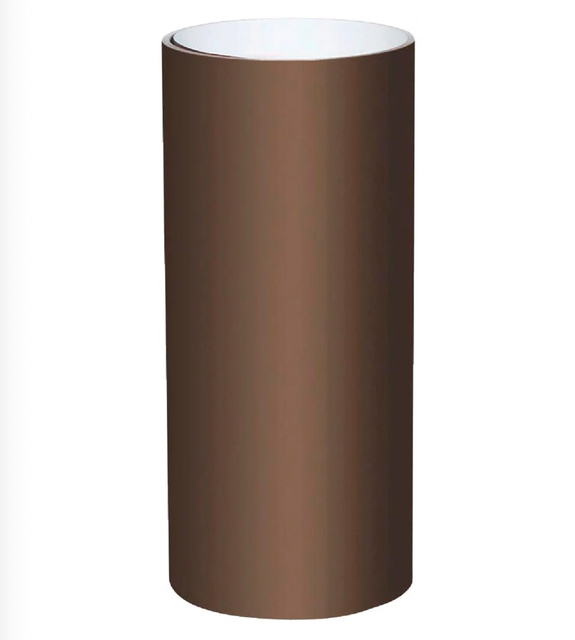
DATC20210820
Dingang
20210820
| Availability: | |
|---|---|
| Quantity: | |
Dingang supplies white aluminum trim coil manufactured from AA3105 aluminum in H28 temper with a nominal thickness of 0.019 inch, approximately 0.48mm. Both sides are protected with polyester coating for exterior trim, fascia covers, window and door wrapping, roof flashing, soffit details and other formed building components.
The 3105-H28 substrate provides the stiffness required for architectural trim while remaining suitable for cutting, brake forming and folding when appropriate bend radii and fabrication practices are used. The factory-applied polyester coating provides a consistent white appearance and additional protection for exposed building details.
Double-sided coating is particularly useful when the reverse surface may remain visible during fabrication or when both faces require a finished protective surface. Final coating performance depends on pretreatment, polyester formulation, dry-film thickness, forming conditions and the service environment.
Request White Aluminum Trim Coil Pricing
| Parameter | Standard Specification | Buyer Information |
|---|---|---|
| Product | White Aluminum Trim Coil | For exterior architectural trim and brake-formed components |
| Aluminum Alloy | AA3105 | Widely used architectural trim-coil alloy |
| Temper | H28 | Higher-strength temper used for trim applications; forming radius should match the material condition |
| Nominal Thickness | 0.019 in | Approximately 0.48 mm |
| Color | White | Custom white shades or other colors can be discussed for suitable orders |
| Coating | Double-Sided PE Polyester | Both faces receive a painted finish according to the agreed coating program |
| Surface | Smooth White Finish | Gloss level and texture can be confirmed before production |
| Fabrication | Cutting / Folding / Brake Forming | Use appropriate forming tools and bend radii to protect the coating |
| Primary Applications | Fascia / Window Trim / Door Trim / Flashing / Wood Wrapping | Exterior finishing and protective architectural trim |
| Supply Form | Small Roll / Slit Coil | Width, length, core and roll weight subject to order confirmation |
In the North American trim-coil market, nominal 0.019-inch AA3105-H28 material is a common configuration. Final actual thickness tolerance, width, roll length and coating build should be stated in the purchase specification.
The image below shows broader trim-coil configurations available within the product range. These options can differ from the standard AA3105-H28 white double-sided polyester product described above.

| Available Range | Options Shown in Current Product Range |
|---|---|
| Thickness | 0.019 in or other thicknesses subject to confirmation |
| Width | 14 in / 24 in |
| Approximate Width | 355.6 mm / 609.6 mm |
| Available Alloys | AA3105 / AA3003 |
| Alternative Temper | H24 shown within broader product range |
| Inner Diameter | 300 mm for applicable larger-roll configurations |
| PE Coating Option | Not less than 18 μm in the listed broader product range |
| PVDF Coating Option | Not less than 25 μm in the listed broader product range |
| Other Colors | White / Grey / Coffee / Black and special-order colors |
| Packing | Small rolls packed in cartons |
| MOQ | 1 ton per specification for applicable orders |
| Delivery | Approximately 15–45 days depending on specification and order quantity |
Send Your Trim Coil Dimensions
Nominal 0.019-inch aluminum, approximately 0.48mm, is widely used for residential and light-commercial trim because it balances material stiffness, weight and ease of fabrication.
The term “0.019 gauge” is commonly used commercially, but 0.019 inch is technically a thickness measurement rather than a standardized aluminum gauge number.
Actual thickness tolerance should be agreed before production where minimum metal thickness is important for fabrication or project acceptance.
AA3105 is an aluminum-manganese alloy commonly used in building products, siding, trim and formed architectural components.
H28 is a relatively hard temper. Compared with softer tempers, it provides greater stiffness but less forming margin. This is suitable for many trim-coil operations when bending and folding are performed with appropriate tooling.
Published trim-coil specifications for AA3105-H28 commonly show approximately 28 ksi ultimate tensile strength, approximately 24 ksi yield strength and low single-digit elongation for material around the 0.019–0.024 inch range.
These values should be treated as reference data unless the exact production coil is supplied with a corresponding material specification or inspection report.
Double-sided coating means both faces of the aluminum receive a painted finish rather than leaving the reverse side as bare metal.
When trim is folded around fascia boards, window openings or architectural edges, parts of the reverse surface can remain visible. A coated reverse side provides a more consistent finished appearance.
The rear coating can provide additional protection during handling and in service, although edge cuts, scratches and contact with incompatible materials must still be controlled.
Polyester trim coil is typically produced using a continuous roll-coating process followed by controlled curing. This provides more consistent coating thickness and appearance than field painting.
Polyester is widely used for architectural trim because it provides a practical balance of appearance, flexibility, weather resistance and cost.
Outdoor durability depends on the complete coating system rather than the word “polyester” alone. Pretreatment, primer, paint formulation, pigment, dry-film thickness, curing, fabrication and climate all influence performance.
Where coating thickness is part of the order specification, front and reverse dry-film thickness should be stated separately. The broader Dingang trim-coil range lists PE coating of not less than 18 μm for applicable products.
Coating adhesion is important because trim coil is cut and folded during installation. Cross-hatch, tape or bend testing can be specified when project requirements demand documented coating performance.
For demanding exterior programs, accelerated humidity and salt-spray testing can be agreed for the exact coating system. Laboratory test hours should not be converted directly into a guaranteed number of outdoor service years.
White is widely used for fascia, windows, doors and roof trim because it coordinates with common siding, soffit and roofing colors and provides a clean architectural appearance.
For distribution or OEM programs, buyers should specify the required white shade, gloss level and acceptable color tolerance rather than relying only on the term “white.”
Custom color matching can be discussed against RAL, PANTONE or an approved physical sample where production quantity and coating capability permit.
Gloss should be controlled together with color because two white coatings with similar color values can still look different when installed side by side if their gloss levels differ.
Trim coil is commonly field-formed or shop-fabricated using a sheet-metal brake. The material can be converted into fascia covers, window trim, flashing and custom edge profiles.
Because H28 is a relatively hard temper, unnecessarily sharp folds should be avoided. Bend radius should match the aluminum thickness, coating flexibility and required profile.
Published polyester trim-coil specifications commonly use T-bend testing to evaluate whether the coating remains attached after forming. If a specific bend requirement applies, it should be included in the purchase specification.
Use suitable metal-cutting tools that produce clean edges and avoid excessive scratching of the painted surface.
Brake surfaces, work tables and handling equipment should be clean and free from abrasive debris that can mark the white coating.
One of the primary uses of white aluminum trim coil is wrapping fascia boards. The formed aluminum creates a durable exterior surface over suitable wood or substrate materials and reduces the need to repeatedly repaint exposed fascia.
Installation details should allow water to drain rather than become trapped between the aluminum cover and the underlying substrate.
Trim coil can be brake-formed around suitable window and door openings to create custom exterior caps, returns and edge details.
Proper flashing and drainage details remain necessary. Aluminum trim should not be used as a substitute for the water-management components required around the opening.
White aluminum trim coil can be fabricated into suitable roof-edge covers, drip-edge components, parapet details and other custom flashing where the chosen thickness and profile meet the application requirements.
Roof-flashing applications should be designed for water drainage, thermal movement and compatibility with adjacent roofing materials.
Aluminum trim coil is widely used to cover suitable exterior wood trim and reduce direct exposure to rain and sunlight.
The aluminum cover should not trap water against the wood. Flashing, joints and lower edges should be formed to allow drainage and drying.
Direct contact between aluminum and some pressure-treated lumber can increase corrosion risk because preservatives and retained moisture can create an aggressive environment.
Where treated lumber is present, a compatible separation membrane or other approved isolation detail should be used according to project requirements.
Aluminum should be isolated from incompatible dissimilar metals where moisture can create an electrical path between them.
Special attention should be given to copper, copper-bearing runoff and certain steel or masonry interfaces. Compatible fasteners, membranes, sealants or separation materials can be required.
Polyester-coated aluminum can be used in many exterior environments, but coastal exposure places additional demands on coating quality, cut edges, fasteners and maintenance.
For highly aggressive marine or industrial environments, the required coating system should be reviewed separately. A higher-performance coating may be more appropriate than standard polyester for some projects.
A light-colored surface can reflect more solar radiation than a dark surface when the coatings have suitable solar-reflectance properties.
However, aluminum trim coil covers relatively small building areas such as fascia, windows and flashing. It should not be described as a primary building energy-saving or thermal-insulation material.
Where solar reflectance is an engineering requirement, the actual coating should be tested rather than assuming performance based only on its white appearance.
Fascia board covering
Window trim and capping
Door trim and exterior casing
Roof flashing and roof-edge details
Soffit and fascia transitions
Exterior wood wrapping
Siding edge trim
Parapet and architectural edge covers
Residential remodeling
Light-commercial exterior finishing
Standard 0.019-inch architectural trim coil should not automatically be specified for vehicles, marine structures, aircraft or structural facade panels. Those applications can require different alloys, tempers, mechanical properties, coating systems and qualification standards.
Nominal thickness and tolerance should be measured and recorded where the project requires controlled metal gauge.
Front and reverse coating thickness can be checked separately to verify the specified double-sided coating system.
Large OEM or distributor orders can define an approved white master sample and instrumental color tolerance to improve lot-to-lot consistency.
Gloss measurement can be included where installed trim must match siding, soffit or other architectural finishes.
Cross-hatch or other agreed adhesion testing can be used to monitor coating attachment to the pretreated aluminum substrate.
T-bend testing can be specified to evaluate coating flexibility during trim fabrication. Published commercial 0.019-inch polyester trim-coil specifications commonly use bend performance as an acceptance parameter.
Impact testing can be specified where the coating must remain adhered after local deformation.
Accelerated humidity testing can be used to compare coating systems and identify blistering or adhesion loss under controlled laboratory conditions.
Neutral salt-spray testing can be specified where corrosion performance is part of the coating requirement. Test hours should not be directly converted into outdoor service-life years.
There is no universal outdoor service life for every polyester-coated aluminum trim coil.
Actual durability depends on pretreatment, paint chemistry, dry-film thickness, pigment, climate, salt exposure, installation details and maintenance. Where a project requires a coating warranty, the exact coating system, geographic exposure and warranty terms should be agreed before ordering.
Aluminum is recyclable and can be recovered at the end of a building component's service life. Actual recycled content and environmental documentation depend on the specific material supply and production route.
Where recycled content or environmental declarations are required for a project, these requirements should be identified before the order is confirmed.
For accurate trim-coil pricing and production confirmation, please provide:
Required alloy and temper
Nominal aluminum thickness
Required width
Required roll length
Core ID if specified
Maximum roll OD or roll weight
White color reference
Required gloss level
Single-sided or double-sided coating
Required PE coating thickness
Required bend or T-bend performance
Fascia, window, flashing or other application
Coastal or high-humidity exposure if applicable
Required coating test reports
Packing requirements
Order quantity
Destination port or delivery location
Get a Custom White Trim Coil Proposal
White aluminum trim coil is commonly used to cover fascia boards, windows, doors, roof edges, flashing and exterior wood trim while providing a factory-finished architectural surface.
It is the nominal metal thickness and equals approximately 0.48mm. Although the market often calls this “0.019 gauge,” 0.019 inch is technically a thickness measurement.
H28 is a relatively hard temper of strain-hardened and partially annealed aluminum. It provides useful stiffness for trim applications but requires suitable bending practices.
Yes. AA3105-H28 is widely used in commercial aluminum trim-coil products because it offers a practical balance of stiffness, corrosion resistance and formability for architectural trim.
It means polyester coating is applied to both faces of the aluminum rather than leaving the reverse side bare. This provides a finished appearance and additional surface protection on both sides.
The standard product is supplied with a white-coated reverse surface. Exact front and reverse color or gloss requirements should be confirmed in the purchase order where appearance is critical.
Yes. It is commonly brake-formed into fascia, window trim and flashing. Because H28 is a relatively hard temper, appropriate bend radii and clean forming tools should be used.
A suitable coating system should tolerate the intended trim-forming process, but performance depends on bend severity, metal thickness, coating chemistry and dry-film thickness. Representative bending trials are recommended for demanding profiles.
The broader current product range includes 14-inch and 24-inch widths. Other widths can be discussed according to production requirements and order quantity.
Yes. Fascia covering is one of the main applications. The formed cover should be detailed to shed water and avoid trapping moisture against the underlying board.
Yes. Trim coil can be formed into window and door caps, returns and exterior edge details. Proper flashing and drainage are still required around the opening.
It can be used for compatible light-duty flashing and trim details where 0.019-inch aluminum meets the application requirements. Structural or specialized roofing components may require different thicknesses or alloys.
Direct contact with some pressure-treated lumber can increase corrosion risk. A compatible isolation membrane or approved separation detail should be used where required.
It can be suitable for many coastal applications, but standard polyester may not be the best coating for every severe marine exposure. Coating system, fasteners, cut edges and maintenance should be reviewed for the actual environment.
No. Aluminum trim coil is not thermal insulation. A white coating can influence solar reflectance, but building thermal resistance is determined mainly by the insulation and complete wall or roof assembly.
A white coating can have higher solar reflectance than a dark coating, but the actual result depends on the coating formulation. Trim coil also covers relatively small building areas, so it should not be treated as a primary energy-efficiency system.
The broader product range includes PVDF coating options for applicable specifications. PVDF can be considered where higher exterior weathering performance is required.
There is no universal service-life value for every polyester coating. Performance depends on pretreatment, paint formulation, film thickness, climate, UV exposure, salt, fabrication and maintenance. Any warranty should apply to the exact supplied coating system.
Yes. White, grey, coffee, black and other special-order colors are available within the broader trim-coil program. Custom color matching can be discussed according to quantity and coating requirements.
The specification image represents a broader available trim-coil range that includes other alloys and tempers. The standard white double-sided polyester product described on this page is AA3105-H28. Buyers should confirm the exact alloy and temper on the quotation and purchase order.
Please provide alloy, temper, thickness, width, roll length, color, front and reverse coating requirements, coating thickness, gloss, fabrication application, required tests, quantity and destination.
Yes. For new colors, tight bends, new coating systems or OEM programs, sample approval and representative brake-forming trials are recommended before bulk production.
Products
Application
Quick links
Contact Us