
 |


Stucco aluminum sheet
Dingang
7610900000
| Quantity: | |
|---|---|
Stucco embossed aluminum sheet and coil is flat-rolled aluminum processed through patterned embossing rollers to create a fine, irregular orange-peel or stucco-like surface. The textured finish is widely used for insulation jacketing, refrigeration equipment, appliance panels, HVAC cladding, architectural panels and decorative metalwork.
The current product range includes 1xxx, 3xxx, 5xxx and selected 6xxx aluminum alloys, with listed thicknesses from 0.15 to 5.00 mm and widths from 300 to 2200 mm. Material can be supplied as sheet, plate or coil according to alloy, temper, dimensions and downstream fabrication requirements.
Compared with smooth mill-finish aluminum, stucco embossing creates a textured appearance that can reduce visible glare and help disguise minor handling marks. It should not be confused with five-bar or diamond tread plate, which uses much larger raised patterns for flooring and walking-surface applications.
For professional purchasing, specify the application, alloy, temper, base thickness, width, sheet length or coil configuration, embossing pattern, surface finish and any coating, moisture-barrier backing or fabrication requirements before production.
Request Stucco Aluminum Sheet Price
| Product Name | Stucco embossed aluminum sheet / coil / plate |
| Listed Alloy Grades | 1050 / 1060 / 1070 / 1100 / 1200 / 1145; 3003 / 3004 / 3005 / 3104 / 3105; 5005 / 5052 / 5754 / 5083 / 5182; 6061 / 6062. Exact availability depends on product form, temper, thickness and embossing capability. |
| Temper | Existing production information lists O–H112. Exact temper must be confirmed for the selected alloy and application. |
| Product Form | Sheet, coil or plate according to specification |
| Thickness | 0.15–5.00 mm according to the listed production range; final availability depends on alloy, temper, width and product form |
| Width | 300–2200 mm according to the listed production range; exact maximum width depends on thickness, alloy and embossing line capability |
| Pattern | Stucco / orange-peel embossed surface; other embossed patterns can be discussed where available |
| Surface Options | Mill-finish stucco, coated, painted or other compatible surface treatment according to end use |
| Base Material Standards | Existing product information references GB/T 3190, GB/T 3880, ASTM B209 and JIS H4000. The applicable current revision should be stated in the purchase order. |
| Quality Documentation | Material certificates, dimensional reports or applicable quality documents can be confirmed according to order requirements |
| Processing | Embossing, slitting, cut-to-length and compatible downstream fabrication according to material specification |
| Typical Applications | Insulation jacketing, pipe and duct cladding, refrigerators, freezers, cold rooms, appliance panels, architectural wall and ceiling panels, roofing or cladding components and decorative fabricated parts |
Stucco embossed aluminum is produced by passing flat aluminum sheet or coil through patterned rollers. Pressure from the embossing rolls transfers a fine irregular texture into the aluminum surface.
The embossing operation changes the surface geometry but does not change the basic alloy chemistry. Mechanical properties remain primarily dependent on alloy, temper, thickness and the complete manufacturing route.
Embossing can provide a modest increase in local rigidity compared with a completely flat thin sheet, but it should not be used as the sole basis for structural design or load-capacity calculations.
| Selection Factor | Stucco Embossed Aluminum | Checker / Tread Plate |
| Pattern | Fine, irregular orange-peel or stucco texture | Large raised five-bar, diamond or directional tread pattern |
| Primary Purpose | Visual texture, reduced glare, surface-mark concealment, insulation jacketing and decorative/appliance panels | Walking, loading and protective surfaces where larger raised pattern geometry is required |
| Typical Gauge | Often thin to medium sheet or coil | Often heavier sheet or plate depending on structural application |
| Walking-Surface Use | Fine texture should not be treated as a certified anti-slip tread surface | Raised tread can improve traction, but actual slip performance still requires appropriate evaluation |
| Typical Applications | Insulation, refrigeration, appliances, cladding, decorative panels | Floors, stairs, truck beds, ramps, platforms |
1xxx-series aluminum provides high aluminum content, good general corrosion resistance, useful thermal conductivity and good formability. These grades are commonly evaluated for insulation jacketing, appliance panels, decorative panels and general-purpose embossed sheet.
3xxx-series Al-Mn alloys provide more strength than commercially pure aluminum while retaining useful formability and corrosion resistance. They are commonly considered for refrigeration panels, insulation cladding, appliance components and architectural panels.
5xxx-series Al-Mg alloys can provide higher strength and improved corrosion resistance for more demanding industrial, transportation, coastal or exterior applications. The exact alloy and temper should be selected according to forming and environmental requirements.
The existing product range also lists higher-strength 5xxx grades. These should be ordered only where their mechanical properties and embossing availability match the intended component, because they are not interchangeable with soft insulation-jacketing alloys.
Selected 6xxx-series products are listed in the existing range. Exact temper, embossing capability and forming suitability should be confirmed because heat-treated conditions can have substantially different bend behavior from non-heat-treatable 1xxx, 3xxx and 5xxx alloys.
Discuss Alloy and Temper Selection
Stucco embossed aluminum is widely used as an outer protective jacket over insulated pipes, ducts, tanks and industrial equipment. The aluminum protects the insulation system from mechanical damage and environmental exposure while providing a clean metallic exterior.
The aluminum sheet itself is not the thermal insulation layer. Thermal resistance is primarily provided by the underlying insulation material and the complete installed system.
For pipe jacketing, buyers should define alloy, temper, metal thickness, roll width, coil ID, required roll length and whether the aluminum needs a moisture-retarder backing such as polykraft or polysurlyn.
Embossed aluminum can be fabricated around insulated ducts, vessels and equipment. Sheet thickness and fastening details should be selected according to panel size, wind exposure, maintenance access and expected mechanical damage.
Where condensation or corrosion-under-insulation risk is important, specify whether a factory-applied moisture-barrier backing is required. The backing system is separate from the stucco embossing and should be stated explicitly in the purchase order.
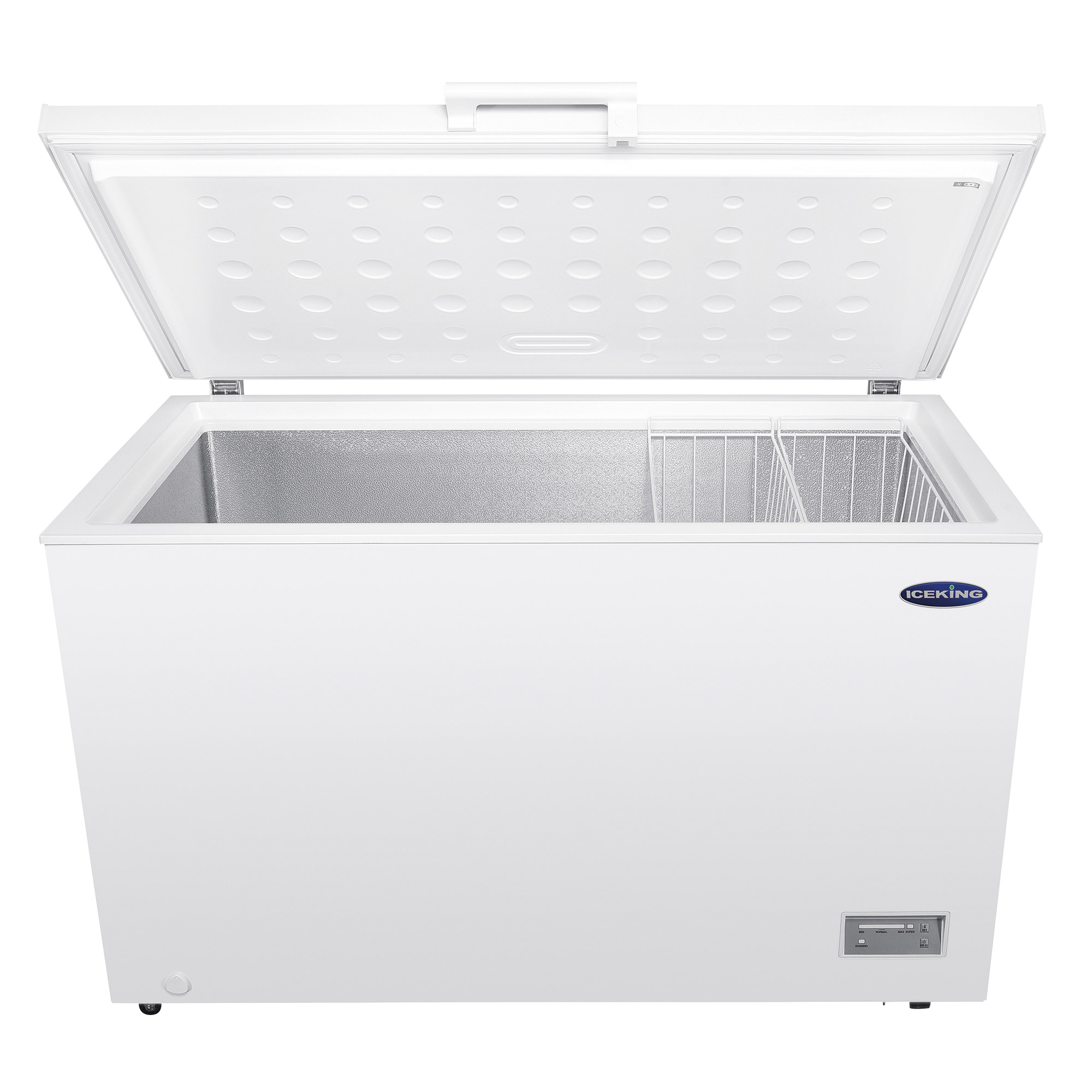
Stucco embossed aluminum is commonly used for refrigeration and freezer panels because it combines low weight, corrosion resistance, cleanability and an attractive textured appearance.
The embossed aluminum can form part of refrigerator liners, freezer panels, cold-room panels, insulation facings and other compatible components where the selected alloy, temper and surface treatment meet the manufacturing requirement.
Thermal performance of a refrigerator or cold-room panel comes mainly from the foam or insulation core, joints, seals and overall panel construction rather than from the embossed aluminum skin alone.
The stucco pattern is a fine irregular texture rather than a large directional tread. It creates a softer visual appearance and can reduce the visibility of small handling marks compared with a smooth reflective sheet.
The textured surface scatters reflected light more broadly than a smooth bright surface, which can reduce mirror-like glare in appliance and architectural applications.
The irregular pattern can make minor scratches, pressure marks and handling imperfections less visually obvious than on smooth sheet. It does not prevent mechanical damage and should not replace proper surface protection during transportation and fabrication.
Embossing changes the sheet geometry and can modestly increase local rigidity in thin material. Structural strength and panel load capacity must still be determined from alloy, temper, base thickness, span and support conditions.
Pattern appearance can vary slightly according to embossing roll design, metal gauge and production route. For visible appliance or architectural work, an approved physical sample is recommended when texture uniformity is important.
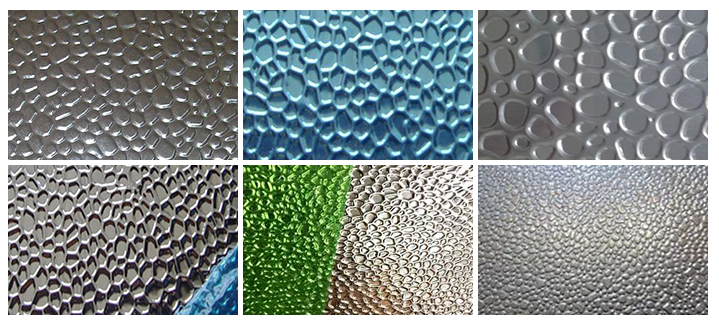
Mill-finish embossed aluminum retains the natural metallic surface and is widely used for insulation jacketing, refrigeration and industrial applications.
Color coating can be discussed where architectural, appliance or decorative projects require a specific appearance. Coating chemistry, color, gloss, film thickness and forming requirements should be confirmed before production.
Anodized finishes can be evaluated for compatible alloys and production routes. Final color and appearance depend on alloy chemistry, pretreatment, anodizing process and embossed surface geometry.
Where additional surface protection is required during fabrication, compatible removable film can be discussed. Film adhesive and removal time should be matched to the actual surface finish and storage conditions.
Discuss Surface and Coating Options
Aluminum naturally forms a protective oxide film and provides useful corrosion resistance in many atmospheric environments. Actual performance depends on alloy, moisture, salt, chemicals, pollution, cleaning agents and contact with dissimilar metals.
Stucco embossing itself does not create additional corrosion protection. Where exterior, coastal or chemically aggressive exposure is expected, select an appropriate alloy and surface system and review cut edges, fasteners, joints and drainage.
For coastal service, 5xxx-series alloys may be considered where their corrosion resistance and forming properties meet the project requirements. The complete assembly should also address galvanic contact and salt accumulation.
Chemical compatibility should be reviewed for the actual environment. Strong alkaline cleaners, acids or specific industrial chemicals can attack aluminum despite its general atmospheric corrosion resistance.
Stucco embossed aluminum can be used for decorative wall panels, ceilings, siding, roofing components and equipment cladding where the selected sheet gauge, support system and surface finish meet the design requirements.
Wind resistance, water management, structural attachment, thermal performance and fire performance are properties of the complete building assembly rather than the embossed aluminum skin alone.
The fine textured appearance can be used for interior wall coverings, ceilings, service areas and industrial-style decorative panels where lower glare and a non-smooth metallic surface are desired.
Stucco embossed aluminum can be evaluated as part of compatible roofing or siding systems. Panel profile, fasteners, joints, wind loading, drainage and coating durability should be specified for the complete system.
Refrigerators, freezers, washing equipment, cabinets and other appliances may use stucco embossed aluminum where low weight, textured appearance and corrosion resistance are beneficial.
For appliance manufacturing, define alloy, temper, sheet thickness, flatness, emboss uniformity, forming requirements, coating and visible-surface acceptance criteria.
Coil can be slit into narrower widths for insulation, appliance and fabrication applications. Width tolerance, burr, camber and coil ID should be specified where the receiving production line requires tight control.
Embossed coil can be cut into sheets where production capability allows. Provide required length, tolerance, squareness and flatness for fabricated panels.
Forming performance depends on alloy, temper, base thickness, bend radius and embossing condition. Tight bends should be trialed on representative material before mass production where appearance or cracking is critical.
Where embossed aluminum is bonded to insulation, foam or another substrate, adhesive compatibility should be validated against the actual aluminum surface, coating and operating environment.
Stucco embossed aluminum is commonly used as the protective outer metal jacket over insulated piping, ducts, vessels and equipment.
The textured aluminum surface can be incorporated into compatible freezer, refrigerator and cold-room panels where the complete panel design supplies the required thermal insulation.
Embossed aluminum can protect insulation surrounding ducts and pipes while providing a clean metallic exterior surface.
Stucco aluminum can be used as a facing material in insulated cold-room panels. Panel structural, thermal and fire performance depends on the complete facing, core, joint and fastening system.
Refrigerators, freezers, cabinets and other equipment can use stucco embossed aluminum for visible or internal panels where the textured metallic appearance is preferred.
The orange-peel texture is suitable for decorative wall coverings, ceilings, equipment rooms, industrial interiors and other architectural surfaces.
Embossed aluminum can be evaluated for compatible roofing and exterior cladding components where alloy, sheet thickness, coating, fastening and environmental requirements are properly specified.
The material can be used for suitable interior trim, refrigeration-vehicle panels and equipment housings where low weight and textured appearance are required. Structural vehicle components require separate engineering approval.
Stucco embossed sheet can be incorporated into cabinets, furniture surfaces, partitions, display fixtures and decorative metalwork where the selected alloy and gauge are compatible with fabrication.
Discuss Your Stucco Aluminum Application
Stucco embossed aluminum should not automatically be substituted for structural tread plate, certified walking surfaces, heat sinks, heat exchangers, boat hull plate, aerospace structural material or solar-module components simply because aluminum is lightweight or thermally conductive.
These applications require specific alloys, mechanical properties, thermal design, corrosion testing, electrical properties, structural calculations or qualification standards beyond a general stucco embossed sheet specification.
Confirm the ordered alloy and temper against the material certificate before releasing the material to cutting, forming or coating.
Check nominal base-metal thickness using the agreed tolerance and measurement method. The embossing relief should not create ambiguity in the specified base gauge.
Verify coil width or sheet width and length before downstream fabrication, particularly where panels must fit automated equipment or modular construction systems.
Check the surface for consistent stucco texture, flattened areas, severe roll marks or pattern defects that may affect visible appearance.
Inspect for scratches, dents, oxide staining, corrosion, coating defects and contamination relevant to the intended application.
For coil supply, verify winding condition, telescoping, edge alignment, coil ID and coil OD according to the receiving equipment.
For a new alloy, thickness, bend geometry, adhesive system or coated finish, test representative production material before approving bulk fabrication.
State whether the material is for insulation jacketing, refrigerator panels, freezer panels, HVAC cladding, cold-room panels, appliance manufacturing, architectural cladding or decorative fabrication.
Provide the approved alloy where already defined. If the alloy has not been fixed, provide strength, corrosion, forming and environmental requirements so an appropriate grade can be discussed.
State the required material condition and any bending or forming requirement. Do not assume every temper between O and H112 is available for every alloy.
Provide the nominal base thickness and tolerance. The listed production range is 0.15–5.00 mm, subject to alloy, width and product-form confirmation.
Provide coil width or sheet width and length. The listed width range is 300–2200 mm, with exact feasibility dependent on material specification.
Where the exact orange-peel texture is visually important, provide an approved pattern sample or photograph and confirm production appearance before bulk supply.
State mill finish, color coating, anodizing, protective film or another required treatment together with visible-surface acceptance criteria.
For coil orders, specify core ID, maximum coil OD, coil weight, winding direction and any requirements of the receiving slitting or forming equipment.
If the aluminum requires a moisture-retarder layer such as polykraft or polysurlyn, specify the exact backing construction rather than ordering only stucco embossed aluminum.
State the required material certificate, dimensional inspection, coating report or other project documentation and identify the applicable material standard and revision.
Send Your Stucco Aluminum Specification
| Sample | Sample availability can be confirmed according to size, specification and shipping requirements before bulk ordering |
| Technical & Sales Support | Specification, material selection and order support can be discussed according to project requirements |
| Trade Terms | EXW, FOB, CNF, CFR, CIF and other mutually agreed terms according to the existing product information |
| Payment Terms | T/T, L/C or other agreed terms according to the quotation and sales contract |
| Packaging | Standard export packing with wooden pallet or customer-specified packing according to sheet or coil dimensions |
| Lead Time Reference | Existing product information references approximately 20 working days; actual production time depends on alloy, dimensions, surface treatment, quantity and order schedule |
| Existing Export Markets | Indonesia, India, Philippines, Korea, Canada, Australia, Japan, Ukraine, African markets and other destinations according to the existing product information |
| Standards and Certificates Listed in Original Information | GB/T 3190-2008, GB/T 3880-2006, ASTM B209, JIS H4000-2006 and ISO 9001 were listed in the original product information. Confirm the applicable product standard, revision and quality-system documentation for the order. |
| Samples | The original information lists free samples. Confirm sample size, specification and shipping arrangements. |
| Technical and Sales Support | Full technical and sales support is listed in the original information. |
| Lead Time | The original information lists 20 working days. Confirm the actual schedule against dimensions, alloy, finish, quantity and production availability. |
| Export Destinations Listed | Indonesia, India, Philippines, Korea, Canada, Australia, Japan, Ukraine and African markets are listed in the original information. |
For an accurate quotation, please provide the application, alloy and temper if specified, nominal thickness, width, sheet length or coil configuration, stucco-pattern requirement, mill finish or coating requirement, backing material if used for insulation, fabrication requirements, quantity, applicable standard, required technical documents, packing requirement and destination.
Get a Stucco Embossed Aluminum Quote
It is aluminum sheet or coil that has been passed through patterned rollers to create a fine irregular orange-peel or stucco-like texture on the surface.
No. Stucco embossing is a fine, non-directional texture normally used for insulation, refrigeration, appliance and decorative surfaces. Checker plate uses much larger raised bars or diamonds and is commonly selected for flooring and tread applications.
The existing product range lists multiple 1xxx, 3xxx, 5xxx and selected 6xxx grades, including 1050, 1060, 1100, 3003, 3005, 3105, 5005, 5052, 5754 and other grades. Exact availability should be confirmed for the required gauge and product form.
The existing production range is 0.15–5.00 mm. Final capability depends on alloy, temper, width, sheet or coil format and embossing requirements.
The existing product information lists widths from 300 to 2200 mm. Exact maximum width depends on thickness, alloy and production capability.
Yes. Coil, sheet and plate are included in the existing product range. For coils, provide width, core ID, coil weight or OD and winding requirements.
No. Aluminum is thermally conductive. In an insulation system, stucco aluminum normally acts as the outer protective jacket or facing while the underlying insulation supplies most of the thermal resistance.
The aluminum facing can protect the insulation and influence surface radiation depending on finish, but the thermal performance of the system is primarily determined by insulation type, thickness, joints, moisture condition and complete assembly design.
The fine texture increases surface roughness compared with smooth sheet, but it should not be treated as a certified anti-slip tread surface. For flooring and stairs, use a product and test requirement designed for walking-surface traction.
Yes. It is widely used as protective jacketing over insulated pipes. Specify alloy, temper, thickness, roll width and any required moisture-barrier backing.
Backing requirements can be discussed for insulation applications. The exact moisture-barrier material and construction should be specified separately from the aluminum embossing.
Yes. Refrigeration and freezer panels are common applications for embossed aluminum. The insulation performance comes from the complete panel construction, including the foam or insulation core.
Not as a universal rule. Heat-transfer performance depends on the complete heat-exchanger geometry, materials, airflow or fluid conditions and surface system. A generic stucco pattern should not be assigned a fixed efficiency improvement.
Yes, compatible color-coated surfaces can be discussed. Specify coating chemistry, color, gloss, film thickness, forming requirements and service environment.
Anodizing can be evaluated for suitable alloys and production routes. Final appearance depends on alloy chemistry, pretreatment and the embossed texture.
It can be used in compatible exterior systems when the alloy, thickness, coating, fasteners and environmental requirements are appropriate. Wind, water and structural performance depend on the complete cladding assembly.
Suitable alloys can be selected for coastal use, but salt exposure, fasteners, cut edges, drainage and galvanic contact must be considered. The stucco texture itself does not provide additional corrosion protection.
Yes, compatible grades and tempers can be formed. Bend radius, alloy, temper, thickness and embossed surface condition should be evaluated for tight or highly visible bends.
Embossing can alter local stiffness, particularly in thin sheet, but structural strength and load capacity must still be determined from alloy, temper, base thickness, span and support conditions.
ASTM B209/B209M can be referenced for applicable aluminum-alloy sheet and plate base-material requirements. Other GB, JIS or customer specifications can be used where appropriate. Embossing pattern and surface requirements should also be defined in the order.
Sample availability can be confirmed according to alloy, thickness, pattern, dimensions and shipping requirements. For appearance-critical projects, approving a representative embossed sample before bulk production is recommended.
The existing product information references approximately 20 working days. Actual lead time depends on alloy, temper, dimensions, surface treatment, quantity and production schedule.
Sheet or coil can be packed with moisture-resistant protection, edge guards, strapping and suitable wooden pallets or other agreed export packing according to dimensions and transportation requirements.
Please provide application, alloy and temper if known, thickness, width, sheet length or coil configuration, stucco-pattern requirement, surface finish, coating or backing requirement, fabrication process, quantity, applicable standard, required documents, packing requirement and destination.

