|


Aluminum Disks
DINGANG
| Quantity: | |
|---|---|
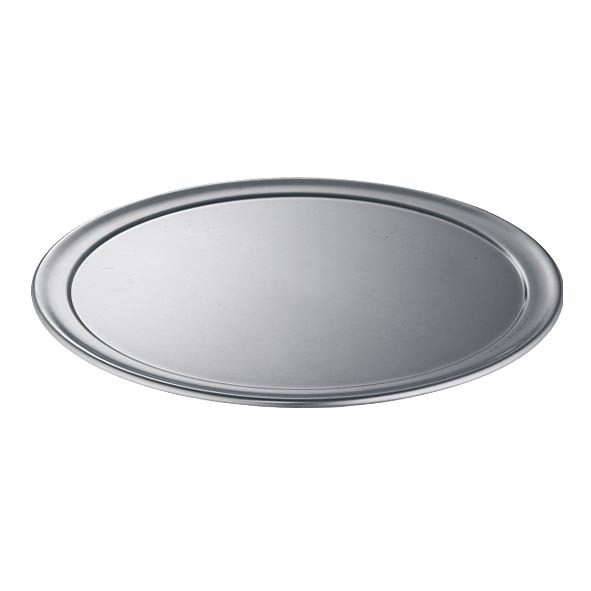
3003 H18 mill finish aluminum circle is a full-hard aluminum-manganese alloy blank designed for kitchenware and industrial components where higher rigidity, dimensional stability and corrosion resistance are required. Typical applications include cookware bases, lids, shallow-stamped kitchenware, rigid round parts, reflectors and other components that require limited forming rather than severe deep drawing.
Compared with fully annealed aluminum, H18 temper provides substantially higher strength and lower elongation. This makes it suitable for components that must retain their shape after stamping or light forming. For deep cookware bodies requiring substantial material flow, a softer temper should be selected according to the drawing depth and production process.
Dingang supplies AA3003 aluminum circles with mill-finish surfaces, custom diameters and multiple thickness options. Diameter tolerance, thickness tolerance, surface quality, edge condition and temper should be confirmed according to the customer's forming equipment and finished component.
Request 3003 H18 Aluminum Circle Price
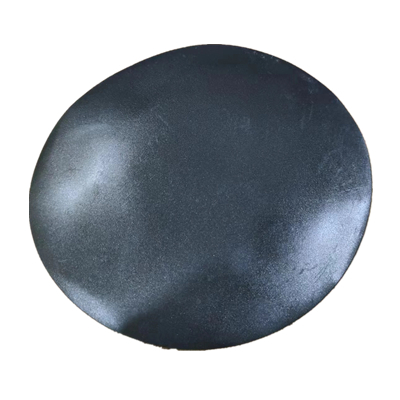
| Product | 3003 H18 mill finish aluminum circle / aluminum disc |
| Primary Alloy | AA3003 |
| Primary Temper | H18 / full-hard strain-hardened condition |
| Available Alloy Range | 1050, 1060, 1070, 1100, 3003 |
| General Thickness Range | 0.40–8.00 mm according to the listed production range |
| General Diameter Range | 85–1250 mm according to the listed production range |
| Surface | Mill finish |
| Typical Processing | Blanking, punching, stamping, shallow forming, light spinning and subsequent finishing where compatible with H18 temper |
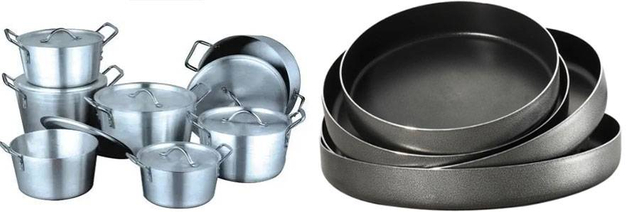
| Typical Kitchenware Applications | Cookware bases, lids, covers, shallow trays, rigid kitchenware components and related stamped round parts |
| Other Applications | Reflectors, lighting components and other rigid circular aluminum parts |
The following dimensional values cover the detailed circle and shaped-blank range associated with this product family. Final thickness, diameter, cutting method and tolerances should be confirmed for each order.
| Parameter | Range | Listed Tolerance / Requirement |
| Thickness for Circles | 0.71–6.35 mm | 0.71–1.40 mm: ±0.08 mm |
| 1.41–2.50 mm: +0.10 / -0.13 mm | ||
| 2.51–4.00 mm: ±0.13 mm | ||
| 4.01–5.00 mm: ±0.15 mm | ||
| 5.01–6.35 mm: ±0.20 mm | ||
| Thickness for Ovals | 1.75–3.00 mm | 1.75–2.50 mm: +0.10 / -0.13 mm |
| 2.51–3.00 mm: ±0.13 mm | ||
| Diameter | 102–1250 mm | Sheared circles: +2 / -0 mm |
| Punched circles: +0.5 / -0 mm | ||
| Earing | <5% for O temper; <9% for H12, H14, H16 and H18 according to the listed dimensional specification |
H18 is a heavily strain-hardened temper. Compared with O, H12 or H14 conditions, it provides higher strength and greater resistance to unwanted deformation, making it useful where the finished component needs to remain relatively flat or rigid.
AA3003 contains manganese as its principal alloying addition. This gives the alloy greater strength than commercially pure aluminum grades while retaining useful corrosion resistance and thermal conductivity.
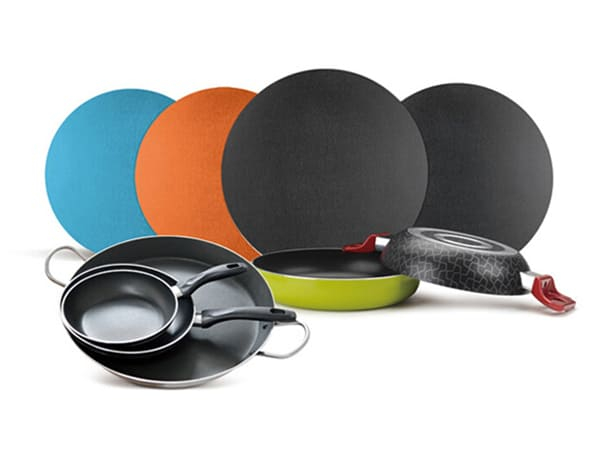
The uncoated mill-finish surface provides a practical starting material for products that will undergo subsequent polishing, anodizing, painting, coating or other finishing operations.
AA3003 provides useful thermal conductivity for cookware and appliance components where heat spreading is part of the product design.
Discuss Your 3003 H18 Application
3003-H18 is selected primarily for high hardness and rigidity rather than maximum ductility. Its forming capability is therefore more limited than softer tempers.
The listed mechanical-property reference for 3003-H18 shows a minimum elongation of 3% and a bend-test radius of 3T. Components requiring severe stretching or a high drawing ratio should therefore be reviewed carefully before H18 material is selected.
For deep pots, high-wall pans or other severely drawn cookware bodies, a softer temper is normally more suitable. H18 is better positioned for flat components, cookware bases, lids, covers and shallow-formed parts where shape retention is important.
Mechanical properties vary according to alloy, thickness and manufacturing route. The following values summarize the listed reference data for the available aluminum-circle series and help buyers compare different tempers before selecting material.
| Alloy | Temper | Minimum Elongation % at 50 mm Gauge Length | UTS (MPa) | Bend Test Radius | |
| Min. | Max. | ||||
| 1050 | O | 29 | 55 | 95 | Close |
| H14 | 6 | 95 | 125 | 1/2T | |
| H18 | 4 | 125 | — | 1T | |
| 1070 | O | 29 | 95 | — | Close |
| H14 | 6 | 95 | 120 | 1/2T | |
| H18 | 4 | 120 | — | 1T | |
| 3003 | O | 25 | 90 | 130 | Close |
| H14 | 5 | 130 | 180 | 1/2T | |
| H16 | 4 | 150 | 195 | 1T | |
| H18 | 3 | 170 | — | 3T | |
The following table summarizes the chemical-composition reference values supplied for the available aluminum-circle range. Final chemistry should be confirmed against the material specification agreed for each order.
| Alloy (%) | AA1050 | AA1070 | AA1100 | AA3003 |
| Fe | 0.40 | 0.25 | 1.00 | 0.70 |
| Si | 0.25 | 0.20 | Fe + Si | 0.60 |
| Mg | 0.05 | 0.03 | — | — |
| Mn | 0.05 | 0.03 | 0.05 | 1.00–1.50 |
| Cu | 0.05 | 0.04 | 0.05 | 0.05–0.20 |
| Zn | 0.05 | 0.04 | 0.10 | 0.10 |
| Ti | 0.03 | 0.03 | 0.05 | 0.10 (Ti + Zr) |
| Cr | — | — | — | — |
| Each Other Element | 0.03 | 0.03 | 0.05 | 0.05 |
| Total Other Elements | — | — | 0.125 | 0.15 |
| Al | 99.50 | 99.70 | 99.00 | Remaining |
Surface quality becomes particularly important when the aluminum disc will later be polished, anodized, coated or used as a visible kitchenware component.
| Surface Quality | Free from unacceptable scratches, pit marks and rolling bands |
| Applicable Standard Reference | ASTM B209M, Aluminum Association standards and data, and agreed manufacturing limits as applicable to the purchase specification |
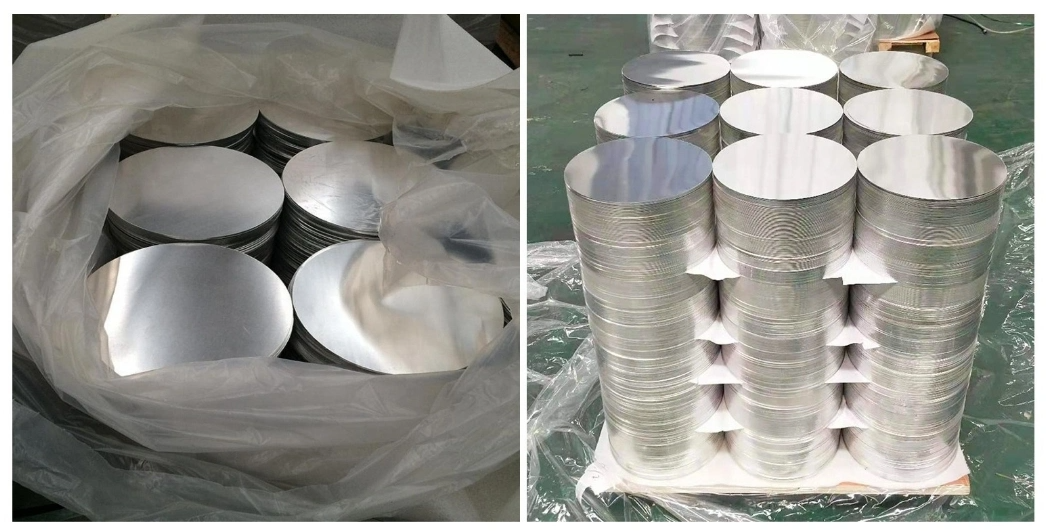
| Packing | Circles packed in boxes or pallets with interleaving paper, polythene and foam protection; pallets and boxes secured for shipment |
| Moisture Protection | Silica-gel packets can be placed inside the packing for moisture protection |
Confirm that H18 is appropriate for the required operation. If the component requires significant stretching, deep drawing or tight bending, a softer temper may provide better processing performance.
Stable thickness helps maintain finished component stiffness, weight and forming consistency. The required tolerance should be stated in the purchase order.
Circle diameter should match the stamping tool, finished component dimensions and trimming allowance. Punched and sheared circles have different listed diameter tolerances.
The edge should be checked for burrs, cracks and mechanical damage before stamping or spinning. Edge defects can create handling problems or become initiation points for cracking during forming.
Check the surface for scratches, pit marks, rolling bands, dents and contamination before production, especially when the component will subsequently receive a decorative or functional surface treatment.
Cookware bases and bottom components
Cookware lids and covers
Shallow-stamped kitchenware
Baking trays and rigid round components
Appliance components requiring higher rigidity
Lighting reflectors
Lamp components
Other circular parts requiring high hardness with limited subsequent forming
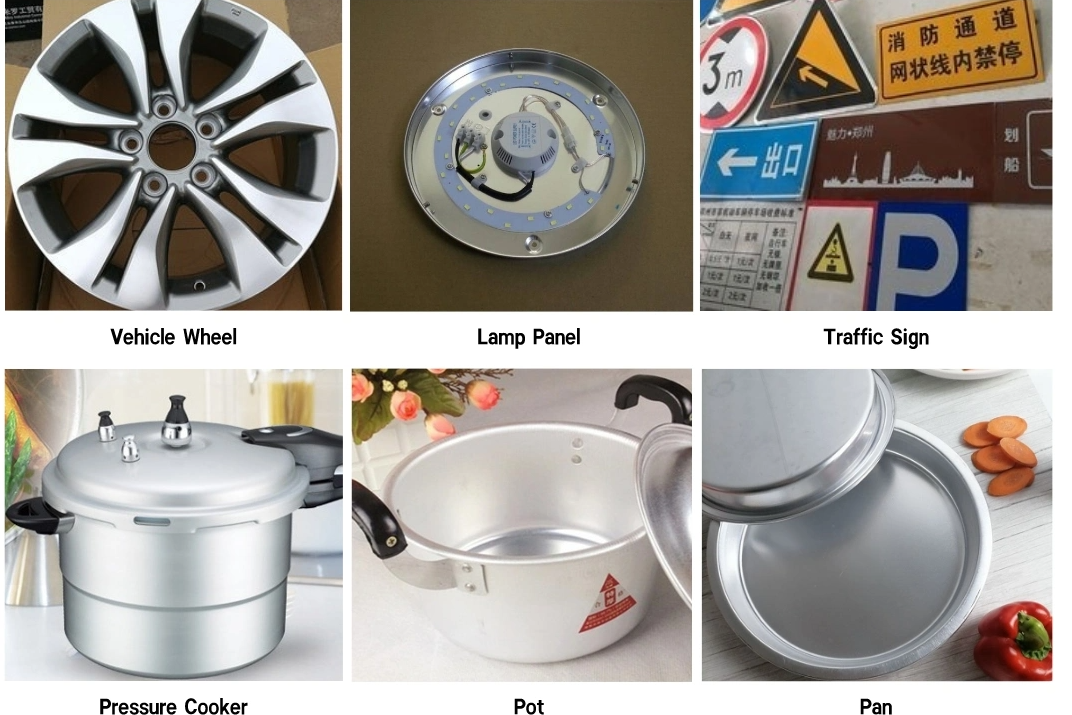
H18 should be selected where rigidity is more important than high elongation. If the part must undergo severe deep drawing, high-wall stretching or tight-radius forming, confirm whether a softer temper is more suitable before ordering.
The broader listed production range covers 0.40–8.00 mm, while the detailed circle dimensional table covers 0.71–6.35 mm. Provide the required nominal thickness and tolerance for final production confirmation.
The broader listed range covers 85–1250 mm, while the detailed dimensional reference covers 102–1250 mm. Final availability depends on thickness, cutting method and quantity.
Where diameter accuracy is important, specify whether punched or sheared circles are required. The listed reference provides different tolerances for each method.
State whether the finished product will be polished, anodized, enameled, PTFE-coated, painted or otherwise finished so that the appropriate mill-finish surface acceptance criteria can be confirmed.
Provide the required material standard, chemical-composition limits, mechanical-property requirements and tolerances where these are specified by the customer's drawing or quality system.
Send Your 3003 H18 Circle Specification
For a faster and more accurate quotation, please provide:
Required alloy and temper
Thickness
Circle diameter
Thickness and diameter tolerances
Punched or sheared circle requirement
Finished product or application
Required stamping, bending or spinning operation
Subsequent surface treatment
Applicable material standard
Required quantity per size
Packing requirements
Destination port or delivery location
For a new kitchenware component, providing the finished-part drawing or current approved material specification can help confirm whether H18 is appropriate for the required forming operation.
Request a 3003 H18 Aluminum Circle Quote
It is a circular blank made from AA3003 aluminum-manganese alloy in H18 full-hard temper. It provides higher strength and rigidity than softer tempers but has substantially lower elongation.
H18 is not the preferred temper for severe deep drawing because its elongation is limited. For high-wall pots and other components requiring substantial material flow, a softer temper should normally be evaluated.
H18 circles can be considered for cookware bases, lids, covers, shallow-stamped kitchenware and other components where higher rigidity and limited forming are required.
3003-O is fully annealed and offers much higher ductility for deep drawing. 3003-H18 is heavily strain hardened, providing greater strength and rigidity but considerably less forming capability.
The listed general production range is 0.40–8.00 mm. The detailed dimensional reference for circles covers 0.71–6.35 mm. Final H18 availability should be confirmed for the required thickness and diameter combination.
The listed general production range is 85–1250 mm, while the detailed circle table covers 102–1250 mm. Custom diameter availability depends on thickness and cutting method.
The listed reference tolerance is +2/-0 mm for sheared circles and +0.5/-0 mm for punched circles. Final tolerance should be confirmed for the actual order specification.
The listed reference gives less than 9% earing for H12, H14, H16 and H18 tempers. Actual acceptance criteria should match the intended forming process.
The mill-finish aluminum can be supplied as a substrate for compatible subsequent finishing processes. Buyers should specify the intended coating, anodizing, polishing or other surface treatment before ordering.
Inspect the circles for scratches, pit marks, rolling bands, edge damage, dents and contamination that could affect forming or subsequent finishing.
The listed packing uses boxes or pallets with interleaving paper, polythene and protective foam. Packing can also include moisture-protection materials for export transportation.
Please provide alloy, temper, thickness, diameter, dimensional tolerances, finished application, forming process, surface-treatment requirement, quantity and destination. A finished-part drawing is recommended when forming is required.