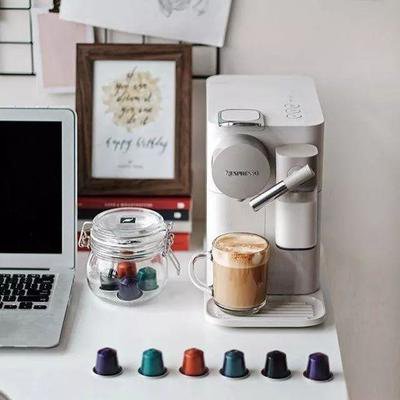
I. Fundamental Concepts and Core Features
Aluminum coffee capsules are small containers made from food-grade aluminum, sealed with coffee grounds inside. Designed specifically for capsule coffee machines, they enable rapid coffee extraction through high pressure (15-19 Bar).
Core Advantages:
Ultimate Freshness Preservation: Blocks 98% oxygen permeation, extending shelf life to 18-24 months (compared to 15 days for traditional ground coffee)
Flavor Locking: Nitrogen-flushing technology enhances coffee crema integrity by 32.6% and preserves 96% of flavor compounds
Precision Extraction: Perfectly matched with espresso machine needle-injection systems, with ±0.2ml accuracy ensuring consistent cup quality
Pressure & Heat Resistance: Wi thstands 19Bar pressure and 95°C temperatures for efficient, safe extraction
Premium Texture: Metallic finish elevates product positioning, offering superior tactile and visual appeal over plastic
II. Structural & Material Details
Triple-Layer Precision Construction:
Main Body: Food-grade aluminum alloy (0.18-0.2mm thickness), comprising over 90% for strength and sealing integrity
Inner Coating: Food-grade non-toxic paint prevents direct aluminum-coffee contact, meeting food safety standards
Sealed Lid: Aluminum foil composite film achieves 0.02mm-level airtightness via heat-sealing technology, ensuring “zero leakage”
Production Process:
1. Aluminum coil stamping → 2. Bottom sealing → 3. Coffee powder filling (±0.02g precision) → 4. Nitrogen flushing (oxygen < 0.5%) → 5. Lid heat sealing → 6. Quality inspection
III. Comparison of Three Major Materials: Aluminum vs. Plastic vs. PaperCharacteristic
| Characteristic | Aluminum Capsule | Plastic Capsule | Paper Capsule |
| Shelf Life | 18-24 months | 6-12 months | 3-6 months |
| Oxygen Barrier | Nearly 100% | 70-85% | 40-60% |
| Pressure Resistance | Excellent (19Bar) | Moderate (12-15Bar) | Poor (<10Bar) |
| Recycling Efficiency | Theoretical 100%, Actual 87%+ | Only 35%, 9% in some regions | High but low strength |
| Environmental Impact | Infinite recyclability, high energy consumption | Difficult to degrade, microplastic risk | Biodegradable, but high production energy consumption |
| Cost | Medium-high ($0.06–0.09/unit) | Low ($0.03–0.05/unit) | Medium ($0.05–0.07/unit) |
| Market share | 42% (Global leader) | 33% | 10% |
Data Sources: Nestlé, Market Research Reports, Coffee Industry Association
IV. Application Scenarios and Market Landscape
Primary Applications:
Home Use: Accounts for 70% of the market; 68% of European households use it daily, while 64% of U.S. consumers use it at least weekly
Commercial Settings: Offices, hotels, restaurants (30% share), enhancing efficiency and ensuring consistent beverage quality
Specialty Coffee: High-end cafes offer diverse single-origin and specialty blends to meet personalized preferences
Market Leaders:
Nestlé Nespresso: 37% global market share, 14.6 billion capsules sold annually, available in 80+ countries
Lavazza: Europe's second-largest player, 9.4 billion capsules sold annually, 48% market share in Italy
illy: Premium positioning, aviation-grade aluminum (0.2mm), double-sealed packaging, 30% enhanced oil release
Other brands: Caffitaly, Starbucks, Kimbo, and numerous compatible brands (32% market share)
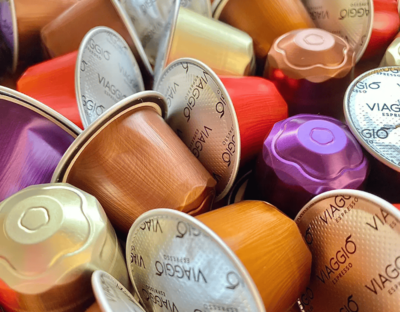
Core Requirements for Coffee Capsule Aluminum Foil
I. Core Requirement: Food Safety (Red Line Standard)
As a material directly contacting coffee powder, food safety is the primary prerequisite. It must comply with global mainstream Food Contact Material (FCM) regulations:
Material Compliance:Must use food-grade pure aluminum or aluminum alloys (commonly 8011, 3003 alloys) with aluminum purity ≥99.0%, free of heavy metals (lead, cadmium, mercury) and harmful substance residues, meeting FDA (US), EU 10/2011 (EU), and GB 4806 (China) standards.
Safe inner coating:The inner surface must be coated with a food-grade heat-seal coating (e.g., PVDC, EVA-modified resin, polyurethane). The coating must pass a “migration test”—after immersion in 4% acetic acid (simulating coffee's acidic environment), the migration of harmful substances must be ≤0.01mg/dm², with no odor or pigment leaching. The coating must withstand coffee's acidic (pH 4.5-5.5) and oily conditions without swelling or peeling.
Production Environment Compliance:Manufacturing must occur in GMP-certified cleanrooms (Class 10,000 or higher) to prevent dust and microbial contamination. Finished products must pass microbial testing (total colony count ≤10 CFU/g).
II. Material and Thickness Requirements: Forming and Extraction Compatibility
Alloy Selection:
Preferred: 8011 aluminum alloy: Exceptional ductility (elongation ≥30%), suitable for deep drawing (coffee capsule stretch ratio ≥3:1), odorless, and resistant to deformation after forming.
Second Choice: 3003 Aluminum Alloy: Slightly higher strength than 8011, suitable for capsules requiring stacked storage. However, its ductility is somewhat weaker, necessitating controlled processing parameters. Prohibited: Series 1 pure aluminum (too soft and prone to rupture), Series 5/6 alloys (may affect taste or forming).
Thickness Control:
Standard thickness: 25-35μm (0.025-0.035mm), most commonly 30μm
Too thin (<25μm): Insufficient pressure resistance, prone to rupture during 19Bar high-pressure extraction; reduced barrier properties, allowing oxygen permeation.
Too thick (>35μm): Increases forming difficulty, coating prone to cracking; Increases capsule weight (0.3-0.5g per capsule), raising costs by 20%+; affects precision of coffee machine piercing needles.
State Requirements:
Must be H18 semi-rigid state or O-state (soft state): H18 state suits capsules requiring stiffness (e.g., Nestlé Nespresso), while O-state offers better ductility for complex-shaped capsules (e.g., irregularly shaped capsules).
III. Barrier Properties: Core of Ultimate Freshness Preservation
The core requirement for coffee capsules is “locking in aroma and extending shelf life.” Aluminum foil must possess top-tier barrier properties:
Oxygen Barrier Rate: ≤0.01 cc/(m²・24h・atm) (23°C, 65% RH), achieving near-complete oxygen blockage (standard aluminum foil: 0.05-0.1 cc). Combined with nitrogen filling (capsule oxygen content < 0.5%), this extends coffee shelf life to 18-24 months.
Moisture Barrier Rate: ≤0.01g/(m²・24h) (38°C, 90% RH), preventing moisture absorption, clumping, and flavor degradation in coffee grounds.
Light Barrier Rate: 100% light blockage (aluminum foil is inherently opaque), shielding coffee from UV damage to aromatic compounds (e.g., caffeine, esters).
Enhanced Coating Barrier: The inner heat-seal coating must provide barrier properties. Some premium products incorporate a nano-ceramic coating layer, further reducing oxygen transmission to below 0.005 cc.
IV. Heat Sealing & Pressure/Heat Resistance:
Compatibility with Coffee Machines Heat Sealing Performance:Sealing Temperature: 120-160°C (compatible with industrial heat sealers). Sealing strength ≥3.0N/15mm (peel test ensures foil base remains intact while coating separates), guaranteeing “zero leakage” during high-pressure extraction. The heat-sealing coating must be compatible with the capsule lid foil (typically 20μm food-grade aluminum foil), ensuring no bubbles or incomplete seals after sealing.
Pressure Resistance:Withstands 15-19 Bar high pressure (coffee machine extraction pressure) without rupture or deformation; the formed capsule body remains leak-free during pressure testing up to 25 Bar.
Heat Resistance:Withstands 95-100°C high temperatures (extraction water temperature) without coating softening, decomposition, or release of harmful substances.

 English
 العربية
 Français
 Русский
 Español
 Português
 Deutsch
 italiano
 日本語
日本語 한국어
한국어 Nederlands
 Tiếng Việt
 ไทย
ไทย Polski
 Türkçe
 ភាសាខ្មែរ
 Bahasa Melayu
 Filipino
 Bahasa Indonesia
 magyar
 Română
 Čeština
 Монгол
 हिन्दी
 فارسی
فارسی Slovenčina
 Slovenščina
 Norsk
Norsk Svenska
 Ελληνικά
 Suomi
Suomi Latine
 Dansk
Dansk Shqip
Shqip Hrvatski
 Afrikaans
 Gaeilge
 Eesti keel
 latviešu
 Azərbaycan dili
 Беларуская мова
 ქართული
 íslenska
 Kinyarwanda
 Lietuvių
 Lëtzebuergesch
 Македонски
 Malti
Malti Türkmençe
 ئۇيغۇرچە
 Cymraeg