| Availability: | |
|---|---|
| Quantity: | |
Decorative brushed color coated aluminum coil combines a directional metallic grain with an organic protective finish for machinery housings, electrical enclosures, appliance panels, equipment covers, control cabinets and other appearance-critical industrial components.
AA3003 is the principal substrate for this product because it provides a useful balance of formability, corrosion resistance and moderate mechanical strength. Additional alloys and tempers are available where higher strength, different forming behavior or other application-specific properties are required.
For appearance-sensitive production, buyers should define not only alloy, thickness and coating type, but also brush direction, grain density, color, gloss, protective film, surface-defect limits and downstream cutting or bending requirements.
Request Brushed Aluminum Coil Pricing
Parameter | Current Supply Specification | Purchasing Consideration |
|---|---|---|
Product Type | Brushed surface color coated aluminum coil | For industrial appearance panels, machinery housings, electrical enclosures and appliances |
Primary Alloy | AA3003 | Useful balance of formability, corrosion resistance and moderate strength |
Optional Alloys | 1050 / 1060 / 1100 / 3003 / 3004 / 3105 / 5052 / 5005 / 5754 / 5083 / 6061 / 8081 | Confirm exact alloy designation, availability and suitability for the final component |
Tempers | O / H12 / H14 / H16 / H18 / H24 / H26 / H32 / H34 | Available temper depends on alloy, thickness and forming requirement |
Thickness | 0.2–1.6mm | Specify base-metal thickness and tolerance before coating |
Width | 30–1600mm | Custom slitting available according to component or production-line requirements |
Inner Core Diameter | 150mm / 405mm / 505mm | Match uncoiler or feeding equipment |
Brushed Finish | Directional brushed metallic texture | Specify fine/coarse grain, line direction and approved physical reference |
Color | RAL / Pantone / Customer sample | Physical coated sample recommended for decorative production approval |
PVDF Coating Thickness | ≥25μm current published reference | Confirm layer construction and dry-film measurement method |
PE Coating Thickness | ≥18μm current published reference | Confirm coating system, gloss, hardness and forming requirement |
Protective Film | Available according to order | Specify tack, film thickness, UV exposure and clean-removal period |
MOQ | 3 metric tons per specification | Confirm for custom alloy, color and brushed finish |
Published Lead Time | 30–45 working days | Final schedule depends on specification, color approval, quantity and production plan |
Loading Ports | Shanghai / Ningbo / Qingdao / Tianjin and other major ports | Final port according to production and logistics arrangement |
Payment Terms | 30% T/T deposit, 70% balance against B/L copy; L/C at sight | Final commercial terms subject to quotation and contract |
For decorative parts, the approved surface sample should form part of the purchase specification because grain density, color, gloss and directional appearance may be as important as alloy and thickness.
Request Surface Samples & Technical Data
A brushed decorative surface is created by controlled directional abrasion that forms a visible linear metallic grain on the aluminum surface.
For color coated brushed products, the exact surface construction should be agreed because different coating systems can produce different levels of visible metallic grain.
A clear or suitably transparent protective coating can preserve a strong metallic appearance while providing additional surface protection.
Transparent or semi-transparent decorative color systems can allow the underlying brushed grain to remain visible while changing the overall tone.
A highly opaque paint layer can reduce the visibility of the mechanically brushed substrate. Buyers requiring a strong visible hairline effect should approve an actual sample of the complete brushed-and-coated construction.
Brushed aluminum is directional. Light reflects differently when the grain direction changes, so panel orientation is important for appliances, cabinets and machinery with adjacent visible parts.
For coil products, the primary grain direction normally follows the controlled brushing direction. Fabricators should record the grain orientation before cutting individual panels.
Adjacent machine covers, cabinet doors or appliance panels should normally maintain the same approved grain orientation to reduce visible shade differences.
Fine hairline finishes provide a subtle decorative appearance, while coarser brushing creates a more pronounced metallic texture. The required texture should be defined by approved physical sample where appearance is critical.
Consistent brushing requires control of abrasive condition, feed speed, pressure and substrate surface quality.
For high-volume appearance parts, buyers can define a reference sample and, where necessary, a measurable surface-roughness range or other agreed texture-control criterion.
The visible grain should be checked for inconsistent line density, local over-brushing, cross scratches and abrupt changes in texture.
Where different production batches will be installed on the same machine or appliance, grain and color consistency should be controlled against an approved master sample.
AA3003 aluminum-manganese alloy is the main substrate for this product and provides good general corrosion resistance, useful formability and moderate mechanical strength.
Suitable 3003 tempers can be bent and folded into covers, door panels, housings and decorative trim. Minimum bend radius should be matched to temper, thickness and coating flexibility.
Punching and shallow stamping are possible with appropriate tooling. Tool clearance, edge condition and forming severity should be confirmed using the actual material specification.
Where higher substrate strength or different corrosion performance is required, 5052 or another available alloy can be considered subject to forming and surface-finish requirements.
Coating | Typical Selection Focus | Industrial Panel Consideration |
|---|---|---|
PE Polyester | Cost-effective decorative coating for indoor and moderate exterior exposure | Suitable for many appliance housings, electrical cabinets and machinery panels after chemical and abrasion requirements are confirmed |
PVDF | Higher exterior weathering and UV resistance | Useful for outdoor electrical cabinets, exterior equipment panels and architectural applications requiring higher weathering performance |
The coating name alone does not determine scratch resistance, hardness, chemical resistance or forming performance. These properties depend on the complete resin formulation, primer, film build, curing and substrate condition.
Good initial coating adhesion is important, but electrical and machinery panels often undergo cutting, punching and bending after coating.
Coating adhesion can be checked on flat samples using an agreed adhesion test where required by the purchase specification.
Representative bends should be inspected for coating cracking, flaking or loss of adhesion when tight folds are part of the finished component.
Forming performance depends on alloy, temper, metal thickness, brushing process, coating chemistry, film thickness, bend radius and tooling. Production trials are recommended for demanding parts.
Brushed finishes can visually disguise some fine handling marks, but neither aluminum nor organic coating should be described as scratch-proof.
Where surface hardness is important, the buyer can specify a coating pencil-hardness requirement and test method.
For machine controls, access doors and high-touch equipment panels, an agreed abrasion or mar-resistance test can provide more useful information than a general scratch-resistance claim.
Temporary protective film can help reduce scratches and contamination during slitting, punching, CNC processing, bending, transport and final assembly.
Brushed metallic surfaces are often used on visible machine, appliance and control-panel surfaces where fingerprints, oils and cleaning marks can affect appearance.
Where required, buyers should specify anti-fingerprint, easy-clean or stain-resistance performance and confirm availability for the selected brushed and color-coated construction.
For appliance and machinery panels, the coating should be evaluated against the actual detergents, oils, disinfectants or maintenance chemicals expected in service.
Large machine covers, electrical-cabinet doors and appliance fronts can reveal waviness, edge wave or residual stress after cutting and forming.
Where visual flatness is critical, buyers should specify acceptable edge wave, center buckle or other flatness criteria rather than relying only on a general statement of good flatness.
Residual stress can become visible after narrow slitting, CNC cutting or asymmetric punching. Representative processing trials are useful for large decorative panels.
Brushed color coated aluminum can be fabricated into compatible machine covers, operator-console panels, equipment doors, decorative trims and non-load-bearing exterior housings.
For manufacturing equipment, identify the lubricants, cutting fluids, hydraulic oils and cleaning chemicals that may contact the coated surface so compatibility can be reviewed.
Finished panel durability also depends on panel geometry, fastening points, vibration, local stress and edge design rather than the aluminum coil alone.
Brushed prepainted aluminum can be used for compatible electrical-cabinet doors, control panels, equipment covers, data-equipment housings and decorative enclosure skins.
The aluminum substrate is electrically conductive, but organic coatings can reduce electrical contact at painted surfaces. Grounding and bonding points should therefore be designed and prepared according to the finished electrical enclosure requirements.
Ingress-protection or enclosure ratings apply to the finished cabinet or equipment assembly, including doors, seals, joints, cable entries and hardware. They cannot be assigned from the aluminum coil alone.
Electromagnetic compatibility depends on the complete enclosure construction, joints, conductive connections, apertures and internal equipment rather than the decorative aluminum skin alone.
Brushed aluminum is suitable for compatible refrigerator panels, freezer trim, washing-machine decorative parts, air-conditioner housings, ovens and other appliance appearance components.
For refrigerator and freezer applications, confirm humidity resistance, detergent compatibility, panel flatness, low-temperature behavior and anti-fingerprint requirements.
Panels used around washing equipment should be evaluated for water vapor, detergents, repeated wiping and forming around openings and control areas.
Kitchen appliance panels may require resistance to grease, household cleaners and elevated local temperatures. The selected coating system should be evaluated against the actual service conditions.
The directional metallic texture also makes brushed color coated aluminum suitable for selected signage, display panels, elevator interiors, furniture trim and commercial interior decoration.
For outdoor signs or exterior decorative panels, coating selection should be based on UV exposure, climate, color-retention requirements and expected maintenance.
Selection Factor | Brushed Color Coated Aluminum | Brushed Anodized Aluminum |
|---|---|---|
Color Range | Broad custom color potential using organic coatings | Color range depends on anodizing process and alloy |
Surface System | Mechanical brushing plus organic coating system | Mechanical brushing plus electrochemically formed oxide layer |
Forming | Coating flexibility must match downstream bending | Anodized layer can have different bend limitations depending on thickness and process |
Repair / Color Matching | Custom paint colors can be developed against approved samples | Batch and alloy can influence anodized appearance |
Selection | Useful when color flexibility and organic-coating functions are required | Useful when anodized metallic appearance is specifically required |
Inspection Item | What to Confirm |
|---|---|
Alloy and Temper | Exact substrate grade and delivery temper |
Base Thickness | Required 0.2–1.6mm gauge and tolerance |
Width | 30–1600mm range as applicable, with order-specific slitting tolerance |
Brush Direction | Required machine direction and panel-orientation markings |
Grain Appearance | Fine/coarse hairline, density and approved physical sample |
Texture Uniformity | Check cross scratches, local variation and visible brushing defects |
Color | Approved RAL, Pantone or physical master sample |
Gloss | Target value and permitted variation where required |
PE Coating Thickness | ≥18μm current published reference where applicable |
PVDF Coating Thickness | ≥25μm current published reference where applicable |
Coating Adhesion | Agreed tape or cross-cut adhesion requirement where specified |
Bend Performance | Coating condition after the required bend radius or forming test |
Pencil Hardness | Specify minimum coating hardness where relevant |
Abrasion / Mar Resistance | Application-specific test where high-touch or sliding contact is expected |
Chemical Resistance | Test actual cleaners, oils, coolants or detergents where relevant |
Flatness | Edge wave, center buckle or approved panel-flatness criterion |
Protective Film | Tack, coverage, removal period and residue |
Coil Quality | Core ID, winding, edges, telescoping, OD and coil weight |
Where a European coil-coated aluminum specification is required, EN 1396 can be used as a purchasing framework for suitable aluminum sheet and strip.
Project requirements can include dimensions, alloy, temper, mechanical properties, coating thickness, adhesion, flexibility, hardness, color, corrosion performance, UV exposure, inspection, packaging and delivery conditions.
Brushed decorative surfaces require careful handling because grain direction and coating appearance can be damaged by sliding contact, impact or trapped particles.
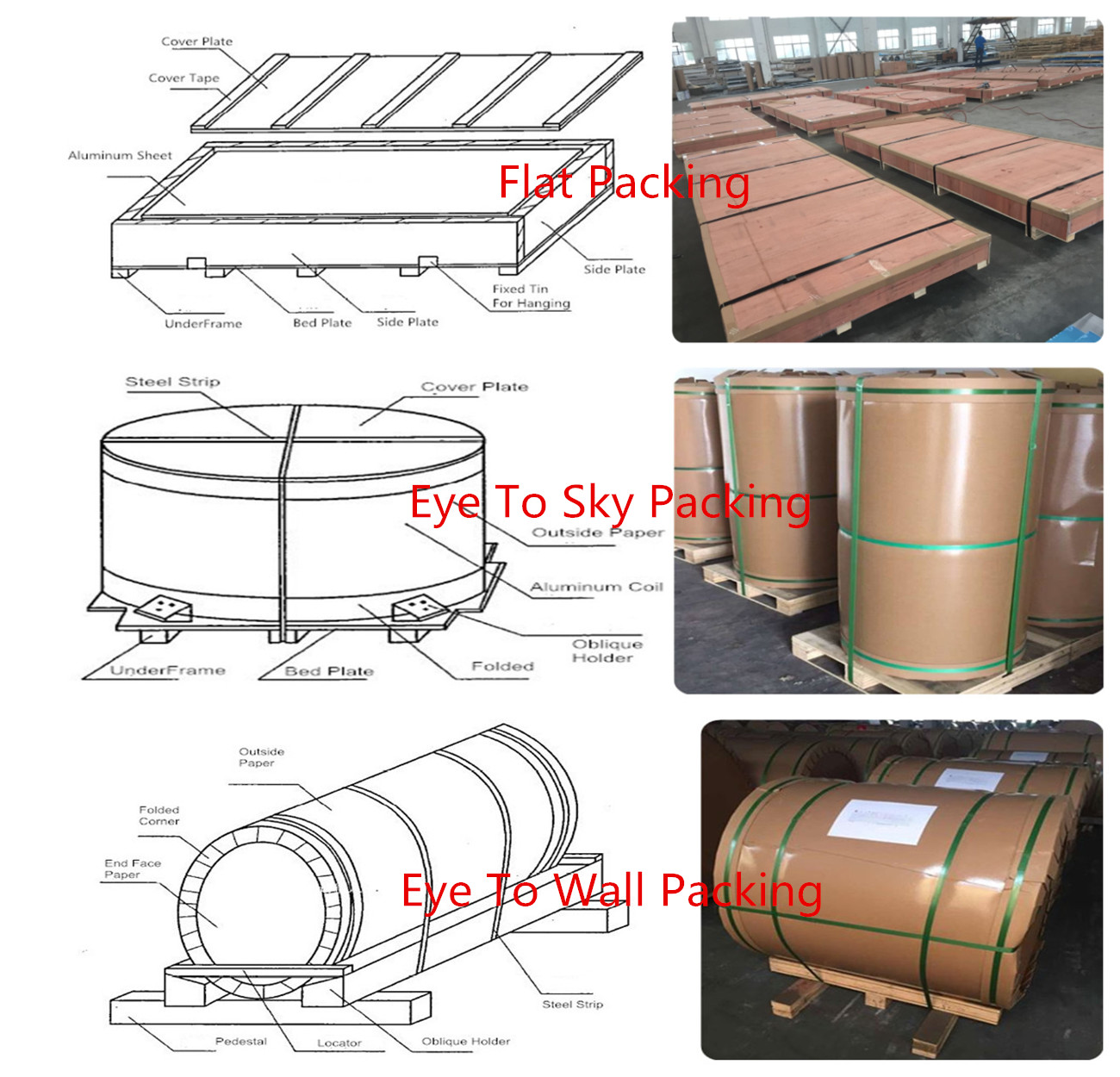
Export-grade wooden pallet packing is available in eye-to-wall or eye-to-sky configurations according to customer handling requirements.
For an accurate brushed color coated aluminum coil quotation, please provide:
Machinery, electrical cabinet, appliance, signage or other final application
Required aluminum alloy
Required temper
Base-metal thickness and tolerance
Finished width and slitting tolerance
Fine hairline, coarse brush or approved texture sample
Required brush direction
Required surface-roughness range, if specified
PE or PVDF coating system
Coating thickness
Transparent, semi-transparent or opaque color-finish requirement
RAL, Pantone or physical color sample
Gloss requirement
Coating-adhesion requirement
Minimum bend radius
Punching, stamping or CNC-processing requirements
Scratch, mar or abrasion requirement
Anti-fingerprint or easy-clean requirement, if applicable
Cleaner, oil or chemical compatibility requirements
Flatness requirement
Protective-film specification
Protective-film UV exposure and removal period
Core ID: 150mm / 405mm / 505mm
Maximum roll OD
Maximum coil weight
Winding direction
Order quantity
Destination country or delivery port
Send Your Brushed Coil Specification
It is aluminum coil combining a controlled directional brushed texture with an organic decorative and protective coating system for appearance-critical fabricated products.
AA3003 is the principal alloy published for this product because it provides useful formability, corrosion resistance and moderate strength.
The current product information lists 1050, 1060, 1100, 3003, 3004, 3105, 5052, 5005, 5754, 5083, 6061 and 8081. Availability should be confirmed against the exact application and specification.
The current published base-metal thickness range is 0.2mm to 1.6mm.
The current range is 30mm to 1600mm, including narrow slit strip and wider coil according to production requirements.
The current published inner-core diameters are 150mm, 405mm and 505mm.
The brushed effect can be developed according to the required visual appearance and production feasibility. For appearance-critical orders, provide a physical reference defining grain density, direction and visual texture.
A directional brushed finish reflects light differently depending on panel orientation. Adjacent visible parts should therefore use a controlled grain direction.
Yes, depending on the coating construction. Transparent or semi-transparent finishes can retain a strong metallic grain, while highly opaque coatings can reduce the visibility of the underlying brushing.
The current product information lists PE coating thickness of at least 18μm.
The current product information lists PVDF coating thickness of at least 25μm.
For indoor cabinets, a suitable polyester system can provide a practical balance of appearance, formability and cost. Outdoor enclosures may require a higher-weathering coating such as a qualified PVDF system depending on exposure requirements.
Yes. Suitable material can be fabricated into machine covers, equipment doors, control panels and decorative housings. Chemical exposure, vibration, forming and structural requirements should be confirmed separately.
Yes, for compatible enclosure panels and decorative skins. Final grounding, ingress protection, EMC and electrical safety requirements apply to the completed enclosure rather than the coil alone.
Organic coating can reduce electrical contact at painted interfaces. Dedicated grounding or bonding locations should therefore be designed into the finished enclosure where required.
No. An enclosure rating depends on the completed cabinet design, doors, seals, joints, cable entries and hardware.
Yes. Brushed color coated aluminum is suitable for compatible refrigerator, freezer, washing-machine, air-conditioner and kitchen-appliance appearance parts after forming and chemical-resistance requirements are confirmed.
No decorative coating should be described as completely scratch-proof. Hardness, abrasion resistance and protective-film requirements should be specified where surface damage is a concern.
Anti-fingerprint or easy-clean requirements can be discussed according to the selected coating and appearance specification. Availability should be confirmed during quotation.
Suitable specifications can be bent, punched and formed. Performance depends on alloy, temper, gauge, bend radius, coating flexibility and tooling, so representative forming trials are recommended for difficult parts.
An agreed tape or cross-cut adhesion method can be used for flat samples. For formed parts, post-bend coating condition should also be inspected where appropriate.
For high-contact equipment panels, specify an agreed abrasion or mar-resistance method, coating construction, cycle count and acceptance criterion rather than using a general wear-resistant claim.
Yes. RAL, Pantone and physical customer samples can be used as references subject to coating and production feasibility.
Yes. Temporary protective film can be specified for scratch and contamination protection during fabrication and assembly. Tack and removal conditions should match the process.
The current published MOQ is 3 metric tons per specification. Final MOQ should be confirmed for custom alloy, color, grain and coating combinations.
The current published delivery cycle is approximately 30–45 working days. Final timing depends on specification, color and surface approval, order quantity and production schedule.
Sample availability can be confirmed according to alloy, gauge, brushed texture, color and coating system. Appearance and forming approval is recommended before bulk production.
Please provide application, alloy, temper, gauge, width, brush texture and direction, coating type and thickness, color, gloss, surface-performance requirements, forming process, protective film, coil dimensions, quantity and destination.
Contact Us for Brushed Coil Samples & Pricing
Products
Application
Quick links
Contact Us