Bending Resistance of Coating on Prepainted Aluminum Sheets: Critical Factors & Fixes
You are here: Home » Blog » Bending Resistance of Coating on Prepainted Aluminum Sheets: Critical Factors & Fixes
Bending Resistance of Coating on Prepainted Aluminum Sheets: Critical Factors & Fixes
Views: 0 Author: Site Editor Publish Time: 2026-10-15 Origin: Site
Bending Resistance of Coating on Prepainted Aluminum Sheets: Critical Factors & Fixes
Bending is a critical process for color-coated aluminum sheets in architectural cladding, automotive parts, and furniture. Poor paint bending performance leads to cracking, peeling, or chipping—ruining aesthetics and durability. Below is a breakdown of core factors, testing methods, and fixes.
- 1100/3003/5052 series: Excellent ductility, ideal for bending (e.g., 5052-H32 allows 1×thickness radius) .- 6061/7075 series: Brittle (6061-T6 needs 3×thickness radius; 7075-T6 is not recommended) .
Paint Type
- PVDF: Superior flexibility (T-bend rating 0T-1T), resists cracking .- Polyester: Lower flexibility (T-bend rating 2T-3T), prone to damage in tight bends .
Bending Parameters
- Minimum radius: Depends on thickness/alloy (e.g., 1mm 5052-H32 needs ≥1mm radius) .- Angle: 90° bends stress paint more than gentle curves.
Coating Process
- Thin, uniform coatings (20-30μm) bend better than thick layers.- Poor adhesion (from inadequate surface pre-treatment) causes peeling.
2. Testing Standard: T-Bend Test
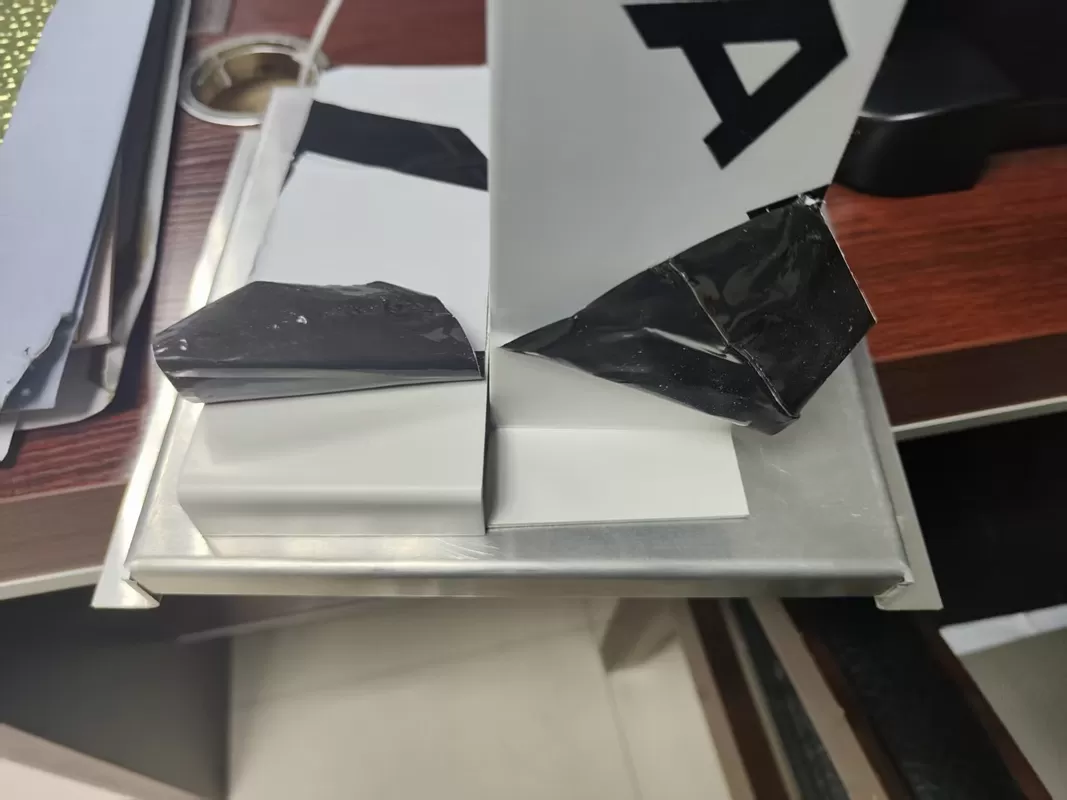
The most common method to evaluate performance (per GB/T 23443-2009 ):
Cut a 100×50mm sample from the color-coated sheet.
Bend the sample around a mandrel to 180° without cracking the paint.
Rate by mandrel diameter relative to sheet thickness (t):
0T: Mandrel = 0×t (best performance, typical for PVDF).
1T: Mandrel = 1×t (good, for most architectural uses).
≥3T: Poor (unfit for bending applications).
3. Common Issues & Solutions
Issue
Root Cause
Solution
Paint Cracking
Small bending radius; brittle alloy/paint
- Increase radius to meet alloy requirements (e.g., 6061-T6 needs 3×t) .- Switch to PVDF or anneal hard alloys.
Paint Peeling
Weak coating adhesion
- Improve pre-treatment (degrease, phosphate).- Use adhesion promoters.
Surface Chipping
Thick coating; rough bending tool
- Control coating thickness (20-30μm).- Use smooth, rounded tools.
4. Quick Selection Guide for Bending Projects
Application
Recommended Alloy
Paint Type
Min. Bending Radius
Architectural Facades
5052-H32
PVDF
1×t
Automotive Trim
3003-H14
PVDF
1×t
Heavy-Duty Parts
6061-T4 (annealed)
PVDF
1.5×t
Budget Indoor Use
1100-H14
Polyester
1×t
Conclusion
Paint bending performance relies on alloy ductility, paint flexibility, and process control. Prioritize 5052/3003 alloys with PVDF coatings for demanding bends, and always validate with T-bend tests. Matching materials to bending requirements ensures long-lasting, flawless results
Dingang Painted aluminum foil is definately your good choie in the production area.
Dingang - The Professional Manufacturer On The Aluminum Alloy Color Coating Aluminum Coil / Sheet Since 2002
Welcome to enquiry us if you have any demand on the coating aluminum coil / sheet material.

 English
 العربية
 Français
 Русский
 Español
 Português
 Deutsch
 italiano
 日本語
日本語 한국어
한국어 Nederlands
 Tiếng Việt
 ไทย
ไทย Polski
 Türkçe
 ភាសាខ្មែរ
 Bahasa Melayu
 Filipino
 Bahasa Indonesia
 magyar
 Română
 Čeština
 Монгол
 हिन्दी
 فارسی
فارسی Slovenčina
 Slovenščina
 Norsk
Norsk Svenska
 Ελληνικά
 Suomi
Suomi Latine
 Dansk
Dansk Shqip
Shqip Hrvatski
 Afrikaans
 Gaeilge
 Eesti keel
 latviešu
 Azərbaycan dili
 Беларуская мова
 ქართული
 íslenska
 Kinyarwanda
 Lietuvių
 Lëtzebuergesch
 Македонски
 Malti
Malti Türkmençe
 ئۇيغۇرچە
 Cymraeg