Aluminum Alloy 3003 Marble Designed Pattern Coating Aluminum Sheet
Dignang Metal
7606125900
| Availability: | |
|---|---|
| Quantity: | |
Modern marble pattern coated aluminum sheet is a decorative solid-aluminum material for hotel lobbies, shopping centers, retail stores, office interiors, reception areas, elevator surrounds and other commercial wall applications requiring a stone-inspired appearance with lightweight metal fabrication.
The current product range covers approximately 0.20–3.00mm aluminum thickness and widths from 30–1500mm. Available substrate options include AA1060, 1100, 3003, 3005, 3105 and 5052, with H16, H24 and project-specific tempers available according to forming and panel requirements.
Marble, stone and custom decorative patterns can be developed according to approved samples or artwork. Surface appearance can be coordinated by pattern scale, vein direction, gloss level and production batch for commercial projects using multiple adjacent wall panels.
Request Marble Pattern Samples

| Parameter | Current Specification | Commercial Wall Notes |
| Product Type | Marble Pattern Prepainted Solid Aluminum Coil / Sheet | For commercial interior wall panels and decorative architectural fabrication |
| Aluminum Alloy | AA1060 / 1100 / 3003 / 3005 / 3105 / 5052 | Select according to required formability, panel stiffness and fabrication method |
| Temper | H16 / H24 / Project-Specific | Final temper should correspond to alloy, gauge and bend requirement |
| Thickness | 0.20–3.00mm | Final gauge depends on whether the material is used as a skin, folded panel or solid decorative wall component |
| Width | 30–1500mm | Custom slit width or sheet width according to wall-panel fabrication |
| Supply Form | Coil / Sheet / Strip / Slat | Commercial wall projects typically use coil for fabrication or cut sheets |
| Primary Pattern | Marble / Stone | Custom marble references can be developed according to sample or artwork |
| Other Pattern Capability | Wood / Wrinkle / Other Decorative Designs | This product page is primarily intended for modern marble-effect commercial walls |
| Color Reference | RAL / Custom Physical Sample / Approved Artwork | Multi-tone marble designs should normally be approved against a physical sample |
| Surface Finish | Matte / Satin / Semi-Gloss / Gloss / High Gloss | Select according to commercial interior design and maintenance requirements |
| PE Paint Thickness | Current source reference >18μm | Suitable coating construction should be confirmed according to the final application |
| PVDF System | Available according to project requirement | Can be specified where higher weathering or chemical-performance requirements apply |
| Core ID | 405 / 505mm | For coil supply; confirm according to processing equipment |
| Pencil Hardness | Current general source reference >2H; detailed coating table lists ≥1H | One contractual value should be selected for the exact coating system |
| T-Bend | Current reference ≤2T for PVDF / ≤3T for PE and other systems | Relevant where material will be folded after coating |
| Impact Resistance | Current reference 50kg·cm without visible cracking or paint loss | Test method and coating system should be specified |
| MEK / Solvent Resistance | Current references ≥70 for PVDF / ≥50 for PE and other systems | Can be used as a coating-cure reference where applicable |
| Protective Film | Optional | Recommended for glossy and appearance-critical commercial wall panels |
| Primary Applications | Hotel lobby / retail wall / office wall / elevator surround / reception area / feature wall | Final panel construction should match the wall-system design |
Commercial interior walls require more than a decorative pattern. Large visible surfaces must maintain coordinated color, gloss, vein direction and panel alignment across the entire space.
Marble-effect aluminum can be used for compatible lobby feature walls, reception backgrounds, columns and entrance-area panels where a polished stone-inspired appearance is required without using full-thickness natural marble.
Custom stone-pattern aluminum can be fabricated into suitable wall panels for atriums, corridors, retail entrances and public circulation areas.
Marble patterns can create coordinated decorative backgrounds for display walls, brand areas, fitting-room corridors and point-of-sale environments.
Commercial offices can use stone-inspired aluminum for reception walls, executive areas, corridor features and elevator-lobby surrounds.
Suitable gauges can be fabricated into decorative wall and trim components around elevators where consistent appearance and cleanable surfaces are required.
Patterned aluminum can provide a lightweight decorative surface for large branded or architectural feature walls while allowing custom panel dimensions and metal fabrication.
This product is based on solid aluminum sheet or coil and should not be confused with conventional aluminum composite panel.
| Comparison | Solid Marble-Pattern Aluminum | Typical ACP / ACM |
| Construction | Solid aluminum substrate with decorative coating | Two thin aluminum skins bonded to a separate core |
| Current Thickness Range | 0.20–3.00mm metal thickness | Usually specified by total panel thickness plus individual skin thickness |
| Fabrication | Cutting, bending, punching and forming according to alloy and gauge | Routing, grooving and folding of a composite sandwich panel |
| Commercial Wall Use | Suitable for compatible fabricated metal wall panels and skins | Commonly used as finished composite wall sheets |
| Fire Performance | Depends on the complete installed wall construction | Strongly influenced by the core material and complete panel construction |
A natural marble or stone sample can be used as a reference for tone, veining and overall visual direction.
Architects and designers can provide approved digital artwork or high-resolution references where a specific modern marble pattern has already been selected.
A physical production sample is recommended before bulk manufacturing because marble designs contain multiple colors, veins and tonal transitions that cannot be represented adequately by a single RAL number.
Background tone, vein color and gloss can be adjusted according to production capability and approved project requirements.
Pattern scale has a major influence on how marble-effect aluminum looks after installation.
A small, tightly repeated vein pattern may work well on narrow trim, while larger lobby walls can require broader pattern movement to avoid a repetitive appearance.
Fine-scale patterns can suit smaller wall panels, elevator surrounds and decorative trim.
Large marble movements can provide a stronger visual effect on hotel lobbies, reception walls and commercial feature panels.
Printed decorative patterns normally repeat at a production interval. Where repeat visibility is critical, the buyer should review the repeat length before approving material for a large uninterrupted wall.
Marble veins can be directional. A commercial wall can look inconsistent if adjacent panels are installed with uncontrolled pattern orientation.
Vertical pattern orientation can emphasize wall height and may suit columns, tall lobby walls and elevator surrounds.
Horizontal pattern orientation can create a wider visual effect on corridors and long feature walls.
Where coordinated panel sequencing is required, the project drawing should identify the intended orientation and order before material conversion and installation.
Material installed on the same visible wall should preferably be produced against the same approved master sample and coordinated production batch.
Commercial marble-effect walls can be produced with different gloss levels depending on design intent and the selected coating system.
| 60° Gloss Reference | Finish | Typical Commercial Wall Effect |
| ≤10 GU | Matte | Low reflection and contemporary stone-like appearance |
| >10–20 GU | Low Gloss | Soft visual surface with limited reflection |
| >20–40 GU | Satin | Balanced soft sheen suitable for many interior wall designs |
| >40–60 GU | Semi-Gloss | More pronounced decorative reflection |
| >60–80 GU | Gloss | Polished appearance with stronger color depth |
| >80 GU | High Gloss | Strong polished-marble visual effect |
For patterned, textured or strongly veined coatings, visual sample approval remains important because instrumental gloss and color measurements do not fully describe the finished appearance.
Matte surfaces reduce reflected light and can create a contemporary stone-like appearance suitable for modern offices, retail stores and understated commercial interiors.
Satin provides a softer reflection that can emphasize marble veining without producing the stronger reflections associated with polished stone.
High-gloss coatings can create a polished-marble visual effect for hotel entrances, luxury retail interiors and reception areas.
High-gloss surfaces can also make scratches, dents and substrate waviness more visually noticeable, so handling, protective film and fabrication controls become particularly important.
PE polyester coating is a practical option for many interior commercial wall applications where color, decorative appearance, formability and cost are primary considerations.
PVDF can be specified where the project requires increased weathering, chemical or UV performance, including walls exposed to stronger sunlight or semi-exterior conditions.
The terms PE or PVDF alone do not define the complete performance of a marble-pattern surface. Primer, decorative layer, finish coat, gloss, curing and reverse-side coating should be considered together.
The metal substrate provides the formable base for the finished commercial wall component.
The aluminum surface is cleaned and chemically prepared before coating.
A suitable primer supports adhesion between the aluminum substrate and decorative coating system.
The base color establishes the principal tone of the marble design.
The approved stone pattern is applied according to the selected production process, scale and vein orientation.
A compatible finish layer can provide matte, satin, glossy or high-gloss appearance together with surface protection.
The reverse side can receive a backing coat, primer or compatible bonding treatment according to panel construction.
AA3003 combines useful formability, moderate strength and corrosion resistance, making it a practical substrate for many folded interior wall panels.
These 3xxx-series alloys can be evaluated for decorative wall and ceiling fabrication where suitable strength and forming properties are required.
AA5052 offers higher substrate strength and can be considered where a fabricated panel requires greater mechanical rigidity.
Commercially pure aluminum provides high formability for suitable decorative skins and trim components but generally offers lower strength than AA3003 or AA5052.
| Thickness Range | Typical Selection Considerations |
| 0.20–0.50mm | Decorative skins, laminated wall components, trim and lightweight panels with suitable backing |
| 0.50–1.00mm | Lightweight fabricated decorative panels with suitable support |
| 1.00–2.00mm | Folded commercial wall panels and more rigid decorative metal components |
| 2.00–3.00mm | Heavier solid-aluminum panel fabrication where project design requires additional metal body |
The correct thickness depends on panel size, edge folds, backing, stiffeners, fixing method and the expected impact or handling conditions.
Coil material can be converted into sheets according to the required wall-panel dimensions and processing capability.
Suitable alloys and tempers can be folded into cassette, tray or return-edge wall panels when the coating flexibility and bend radius are appropriate.
Openings for sockets, access panels, displays, elevator controls or other commercial-wall components can be incorporated during downstream fabrication.
Compatible gauges can be fabricated into curved or radius components according to the required geometry and forming process.
Marble-effect aluminum can be used for suitable column wraps where lightweight decorative metal fabrication is preferred.
Decorative marble-pattern surfaces can pass through several cutting, folding, transport and installation stages before the commercial space is completed.
Temporary protective film can reduce scratching, dust and construction-site contamination during these operations.
The film type should be compatible with the coating and removed within the period recommended by the protective-film supplier.
Commercial wall panels in high-traffic areas should be handled carefully during fabrication and installation. Surface hardness alone does not make the coating immune to scratching from sharp objects.
For normal interior cleaning, use a soft cloth or non-abrasive cleaning material together with a cleaner compatible with the approved coating system.
Steel wool, hard abrasive pads and aggressive cleaners can change gloss or damage the decorative finish and should not be used unless specifically approved by the coating supplier.
Where commercial operators use specific disinfectants or cleaning chemicals, compatibility should be checked on a sample before repeated use.
Hotel lobbies, retail corridors and commercial entrances can be exposed to luggage, carts, furniture movement and daily public traffic.
Impact resistance of the finished wall depends on aluminum gauge, panel geometry, backing substrate, fixing method and coating performance.
Where high impact is expected, the complete wall panel should be tested rather than relying solely on a coating impact value.
The following values are retained from the existing product performance table. They should be linked to the exact coating system and agreed test procedure before being used as contractual acceptance criteria.
| Test Item | PVDF with Varnish | PVDF without Varnish | PE & Other Systems |
| Paint Film Thickness | ≥22μm | ≥30μm | ≥18μm |
| Gloss ≥80 GU | Current tolerance reference ±10 gloss units | ||
| Gloss 20–80 GU | Current tolerance reference ±7 gloss units | ||
| Gloss <20 GU | Current tolerance reference ±5 gloss units | ||
| Pencil Hardness | Current detailed table reference ≥1H | ||
| Abrasion Resistance | ≥5L/μm | ≥5L/μm | Project-specific |
| T-Bend | ≤2T | ≤2T | ≤3T |
| Impact Resistance | Current reference 50kg·cm without visible coating loss or cracking | ||
| Adhesion | Current reference ≥Class 1; test method should be confirmed | ||
| Boiling Water Resistance | No visible change under the current reference test | ||
| Acid Resistance | No visible change under the current reference test | ||
| Alkali Resistance | No visible change under the current reference test | ||
| Oil Resistance | No visible change under the current reference test | ||
| Solvent Resistance | ≥70 | ≥70 | ≥50 |
| Scrub Resistance | Current reference ≥10,000 cycles without visible change | ||
| Dirt Resistance | ≤15% | ≤15% | Project-specific |
| Salt-Spray Reference | Current source reference ≥Class 2 | Current source reference ≥Class 2 | Project-specific |
Pencil-hardness testing provides a reference for the cured coating surface but should not be interpreted as complete scratch-resistance performance for a finished commercial wall.
T-bend is relevant where marble-pattern aluminum will be folded after coating into tray, cassette or return-edge wall panels.
A defined solvent-rub test can be used as a coating-cure reference where appropriate to the selected coating chemistry.
Impact testing provides information about coating behavior during deformation, but final wall impact performance depends on the complete fabricated panel.
For large commercial walls, appearance control should include both color tone and gloss because the same marble pattern can look different at different gloss levels.
For applicable coil-coated aluminum, purchase documents should identify product form, aluminum alloy, temper, metal thickness, width and sheet length or coil dimensions.
The top-side coating should identify the approved color or decorative pattern and nominal gloss. Protective film should be specified where required.
Reverse-side treatment, coil ID, packing configuration, coil weight and winding direction should also be stated where they affect downstream processing.
A representative wall mock-up is recommended for hotels, retail projects, corporate interiors and other appearance-critical commercial spaces.
The mock-up allows the architect, contractor and owner to evaluate marble pattern scale, vein direction, panel joints, gloss, lighting and viewing distance before bulk material approval.
Commercial interiors can use daylight, warm lighting, spotlights and indirect LED lighting. The same decorative surface can look different under each condition.
Joint width and alignment can influence whether the marble pattern appears continuous or fragmented across the wall.
Once the mock-up is approved, the marble pattern, gloss, background tone, vein direction, alloy, thickness and coating structure can be recorded for repeat production.
Request Samples for Wall Mock-Up

| Ordering Item | Current / Recommended Information |
| MOQ | Current source reference approximately 1–5MT per specification |
| Required Inquiry Data | Alloy, temper, thickness, width, pattern, coating, gloss, supply form and quantity |
| Available Forms | Coil / sheet / strip / slat according to project requirement |
| Inner Core | Paper core for coil supply |
| Core Diameter | 405 / 505mm |
| Outer Protection | Paperboard and suitable protective wrapping |
| Export Packing | Wooden pallet suitable for ocean transportation |
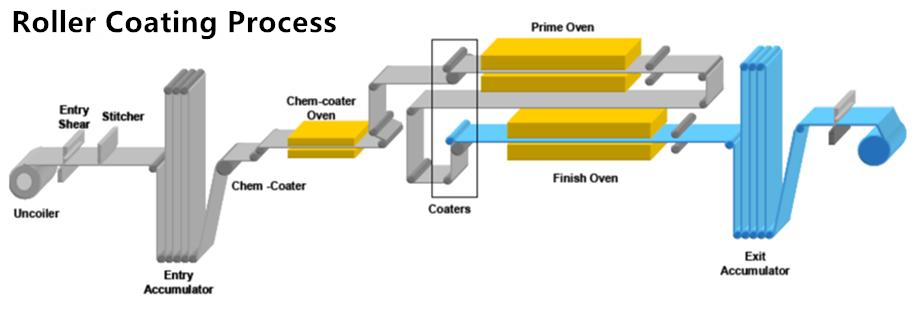
The aluminum substrate is selected according to the approved alloy, temper and metal thickness.
The surface is cleaned and treated before decorative coating to provide suitable coating adhesion.
A compatible primer is applied according to the selected coating construction.
The primary background color is applied to establish the tone required for the marble design.
The approved decorative pattern is applied according to the specified design, pattern scale and direction.
A compatible finish controls final gloss and provides surface protection of the decorative pattern.
The coating system passes through the appropriate curing process according to the selected paint chemistry.
Finished coated material can be leveled, slit or cut according to customer dimensions and downstream fabrication requirements.
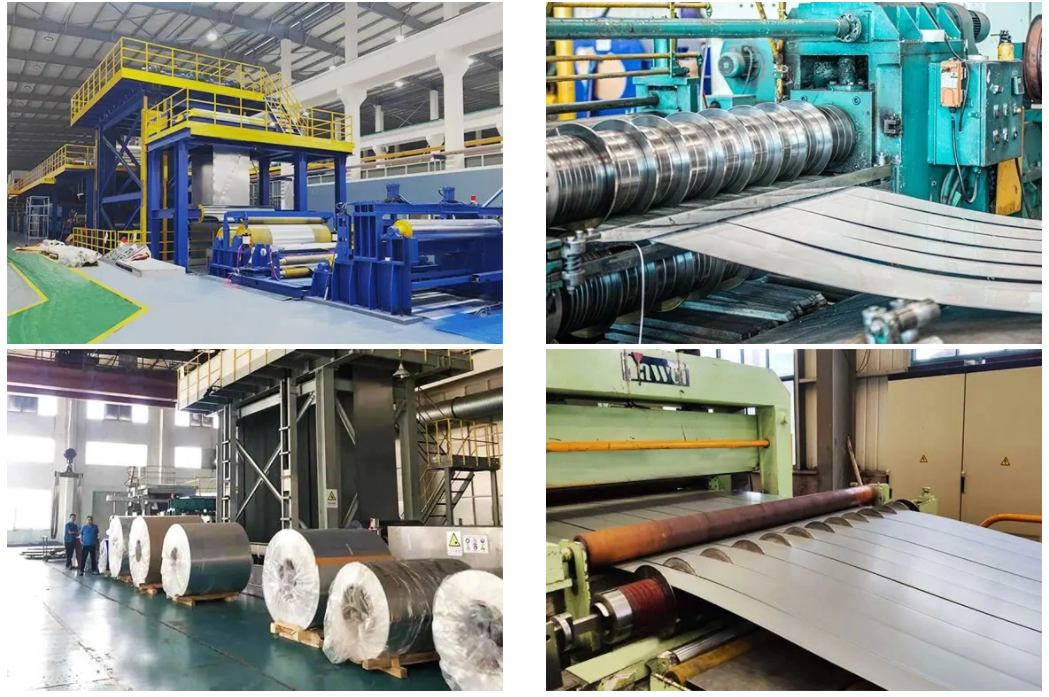
Dingang's current production information includes aluminum coating lines together with leveling, cleaning, embossing, cross-cutting and slitting equipment for prepainted metal conversion.
Decorative coating capability includes stone, marble, wood, terracotta, concrete and other visual patterns according to production feasibility and approved references.


Available documentation can be discussed according to the exact alloy, coating system and project requirements.
If the project requires a material certificate, coating inspection report, color approval record or other specific document, include the requirement in the inquiry before production.

| Inspection Item | Recommended Control |
| Alloy & Temper | Verify according to the approved material specification |
| Metal Thickness | Measure substrate gauge against agreed tolerance |
| Width / Length | Check against ordered coil or sheet dimensions |
| Marble Pattern | Compare against approved physical master sample |
| Pattern Scale | Verify where a defined visual scale is required |
| Pattern Direction | Verify according to wall-layout requirements |
| Color Tone | Evaluate visually against the approved master |
| Gloss | Measure where applicable and compare with the approved nominal value |
| Coating Thickness | Verify according to approved paint-system construction |
| Coating Adhesion | Test according to agreed method |
| T-Bend | Check where panels will be folded or fabricated after coating |
| Surface Condition | Inspect for scratches, dents, streaks and unacceptable decorative defects |
| Protective Film | Inspect coverage and removability where specified |
Modern marble-pattern aluminum should be protected against scratching, rubbing, moisture and deformation during transportation.
Standard export packing can include suitable wrapping, paperboard protection and seaworthy wooden pallets according to material form and shipment requirements.

For an accurate quotation, please provide the commercial-wall application, aluminum alloy, temper, thickness, finished width or sheet size and required quantity.
Please also provide the marble reference, background color, vein color, pattern scale, pattern direction and required gloss level.
If the material will be folded, punched or laminated to a backing substrate, provide the panel construction and fabrication drawing.
Where specific cleaning chemicals, impact requirements, coating hardness or fire documentation are required by the commercial project, include those requirements before order confirmation.
Request Technical Details & Pricing
It is solid aluminum sheet or coil finished with a decorative coating designed to reproduce modern marble or stone-like patterns for commercial wall applications.
Typical applications include hotel lobbies, shopping centers, retail stores, office reception areas, elevator surrounds, corridors and commercial feature walls.
No. This product is based on solid aluminum sheet or coil. ACP and ACM use separate aluminum skins bonded to a core.
The current product range includes AA1060, 1100, 3003, 3005, 3105 and 5052.
The current range is approximately 0.20–3.00mm.
The current supply range is approximately 30–1500mm.
Yes. Pattern development can be discussed using a physical stone sample, photograph, design file or approved artwork.
Yes. Vertical, horizontal or project-specific marble orientation can be specified according to the wall layout and production method.
Pattern scale can be discussed according to production capability. Large feature walls generally benefit from reviewing the pattern scale and repeat before mass production.
Printed or transferred decorative patterns normally have a repeat interval. Buyers should confirm the repeat before approving material for large continuous wall areas.
Matte, satin, semi-gloss, gloss and high-gloss surfaces can be discussed according to the selected coating system.
For suitable smooth coil-coated surfaces, a 60-degree gloss value above 80 gloss units can be used as a high-gloss reference.
The choice depends on the design concept. High gloss creates a polished stone effect, while satin or matte finishes reduce reflection and can create a more contemporary appearance.
Yes. Suitable alloy, temper and thickness combinations can be folded when the bend radius and coating flexibility are appropriate.
Yes. Protective film can be supplied where the decorative surface needs protection during cutting, forming, transport and installation.
No decorative coating should be considered completely scratch-proof. The coating can provide useful surface hardness, but sharp objects and abrasive cleaning can still cause damage.
Use soft non-abrasive cleaning materials and cleaners compatible with the approved coating system. Aggressive chemicals should be tested before repeated use.
The current general specification lists PE above 18μm, while the detailed source table includes PVDF references of at least 22μm or 30μm depending on coating construction.
The current detailed performance table lists ≤2T for PVDF and ≤3T for PE and other coating systems. Contractual values should identify the exact paint system and test method.
Suitable coating systems can be evaluated for exterior or semi-exterior applications, but this page is primarily intended for commercial wall and interior architectural use. Exterior facade projects should specify the required weathering system separately.
No complete wall-system fire classification should be inferred from the decorative aluminum sheet alone. Fire performance depends on the complete panel, backing, insulation and installed wall construction.
For large commercial projects, a representative mock-up is strongly recommended to evaluate pattern scale, panel joints, color, gloss and appearance under the actual project lighting.
The existing product information lists approximately 1–5 metric tons per specification as a current reference. Final MOQ depends on marble pattern, coating, dimensions and production requirements.
Please provide alloy, temper, thickness, sheet or coil dimensions, marble pattern reference, pattern direction, gloss, coating type, fabrication requirements, quantity and commercial-wall application.
If you manufacture commercial wall panels or require decorative marble-effect aluminum for hotels, retail interiors, offices or feature walls, send us your pattern reference and project dimensions.
We can discuss 0.20–3.00mm solid aluminum, widths up to 1500mm, custom marble patterns, matte to high-gloss finishes, PE or PVDF coating systems, cut sheets and fabrication requirements.

Products
Application
Quick links
Contact Us