What Are The Special Requirements for Brushed Color-coated Aluminum Specially Used for Home Appliance Panels?
You are here: Home » Blog » What Are The Special Requirements for Brushed Color-coated Aluminum Specially Used for Home Appliance Panels?
What Are The Special Requirements for Brushed Color-coated Aluminum Specially Used for Home Appliance Panels?
Views: 0 Author: Site Editor Publish Time: 2026-05-13 Origin: Site
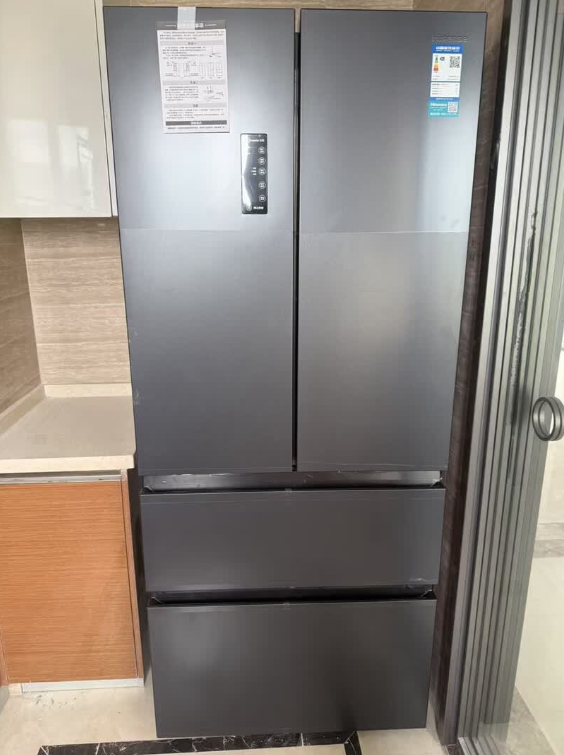
Brushed color-coated aluminum is a core material for high-end home appliance panels (e.g., refrigerators, ovens, range hoods, and air conditioners). Unlike ordinary brushed aluminum, it must meet strict standards for appearance, durability, processability, and environmental compliance to adapt to complex kitchen environments (high temperature, humidity, oil fumes) and high consumer expectations for texture and quality. Below are its key special requirements.
The visual and tactile quality directly determines the premium feel of home appliances, with zero tolerance for critical surface defects.
Uniform Brushed Texture
Unidirectional hairline lines (0.05–0.1mm width) must be continuous, consistent in depth, and free of broken lines, streaks, or uneven grain. No visible scratches, dents, or blemishes on Class A (main visible) surfaces.
Controlled Gloss & Color
Low-to-moderate gloss (60–90 GU) for a sleek, non-reflective finish; color consistency within ΔE≤1.5 to avoid batch-to-batch chromatic aberration. Common tones include star silver, matte black, and champagne gold.
Anti-Fingerprint & Easy-to-Clean
A specialized anti-fingerprint coating (e.g., oleophobic resin) ensures fingerprints, oil stains, and dust can be wiped off with a dry cloth, maintaining a clean look in greasy kitchen environments.
Surface Roughness
Ra≤1.6μm for a smooth, comfortable touch without sharp edges.
2. Superior Durability for Harsh Kitchen Conditions
Home appliance panels must withstand long-term exposure to oil, moisture, high temperature, and daily friction without degradation.
Excellent Corrosion Resistance:
Salt spray test: ≥300 hours (neutral NSS) without rust or coating blistering.
Resistance to acids, alkalis, and detergents: Unaffected by common kitchen cleaners (pH 4–10); no discoloration or peeling after 24-hour immersion.
Humidity resistance: No mold or oxidation after 500 hours at 85°C and 95% RH.
High Wear & Scratch Resistance:
Coating hardness: ≥2H (pencil test) to resist daily scratches from cleaning or contact.
Abrasion resistance: ≥5,000 cycles (Taber test) with minimal wear and no exposure of the aluminum substrate.
Thermal Stability: Withstands -40°C to 120°C without coating cracking, warping, or discoloration—critical for ovens and range hoods.
3. Precise Dimensional Accuracy & Processability
Panels require tight tolerances for seamless assembly and post-forming (bending, stamping) without damage.
Dimensional Tolerance
Thickness (0.4–1.0mm) ±0.02mm; flatness ≤0.5mm/m to ensure perfect fitting with appliance frames.
Excellent Formability:
T-bend: 0–1T (no coating cracking after 180° bending).
Elongation: ≥8% to resist stamping and deep drawing without tearing.
Stable Mechanical Properties
Tensile strength 115–165N/mm²; yield strength ≥100N/mm² for consistent processing.
4. High-Purity Substrate & Coating Quality
The base aluminum and coating system determine the panel’s longevity and performance.
Alloy Selection
Primarily 1xxx (pure aluminum, e.g., 1050/1100) or 3xxx (aluminum-manganese, e.g., 3003) alloys—lightweight, formable, and corrosion-resistant.
Substrate Quality
No pinholes, inclusions, or surface oxidation; uniform grain structure for consistent brushing.
Coating System:
Primer: Epoxy resin (5–10μm) for strong adhesion and corrosion protection.
Topcoat: Polyester (PE) or fluorocarbon (PVDF, 20–30μm) for weather resistance and color stability; PVDF is preferred for high-end appliances.
Adhesion: ≥Grade 0 (cross-cut test) to prevent peeling during processing or use.
5. Strict Environmental Compliance
Compliance with global environmental standards is mandatory for home appliances.
RoHS Compliance
Free of lead, mercury, cadmium, hexavalent chromium, PBBs, and PBDEs.
Low VOC & Formaldehyde
Eco-friendly resins with zero formaldehyde emission and VOC content <100g/L, meeting GB 18585 and EU EN 71-3.
100% Recyclable
Aluminum substrate and coating are fully recyclable, aligning with sustainable manufacturing goals.
Conclusion
Brushed color-coated aluminum for home appliance panels is a high-performance material integrating aesthetic design, functional durability, and environmental protection. Its special requirements focus on texture uniformity, anti-fingerprint easy cleaning, corrosion/wear resistance, precise processability, and green compliance—all critical to enhancing the quality and market competitiveness of home appliances.

 English
 العربية
 Français
 Русский
 Español
 Português
 Deutsch
 italiano
 日本語
日本語 한국어
한국어 Nederlands
 Tiếng Việt
 ไทย
ไทย Polski
 Türkçe
 ភាសាខ្មែរ
 Bahasa Melayu
 Filipino
 Bahasa Indonesia
 magyar
 Română
 Čeština
 Монгол
 हिन्दी
 فارسی
فارسی Slovenčina
 Slovenščina
 Norsk
Norsk Svenska
 Ελληνικά
 Suomi
Suomi Latine
 Dansk
Dansk Shqip
Shqip Hrvatski
 Afrikaans
 Gaeilge
 Eesti keel
 latviešu
 Azərbaycan dili
 Беларуская мова
 ქართული
 íslenska
 Kinyarwanda
 Lietuvių
 Lëtzebuergesch
 Македонски
 Malti
Malti Türkmençe
 ئۇيغۇرچە
 Cymraeg