composite aluminum foil
You are here: Home » composite aluminum foil

LACQUERED  ALUMINUM FOIL SUPPLIER

What Is Lacquered Aluminum Foil?

Lacquered aluminum foil for food containers is a high-performance packaging material designed for disposable food trays, takeaway containers, and ready-meal applications. By applying a food-grade lacquer coating on aluminum foil, the material achieves excellent heat sealability, corrosion resistance, and enhanced compatibility with various container types.

It is widely used in industries such as food service, airline catering, and ready-to-eat meal packaging, where hygiene, durability, and performance are critical.

How to choose the lacquered aluminum foil for food containers?

1) Application Requirements.

 
The first step is to clearly define the end-use application of the foil. Different food packaging scenarios such as takeaway containers, ready meals, airline catering trays, or frozen food packaging require different performance levels. For example, ready meals may require oven resistance, while takeaway packaging focuses more on fast sealing and leak prevention. Understanding the application helps determine the right coating system, thickness, and mechanical strength needed for stable performance.


2) Lacquer Type Selection.

 
The type of lacquer coating is one of the most important factors in product selection. Heat seal lacquer is commonly used for applications that require strong bonding with PP, PS, or PET containers, ensuring airtight and leak-proof packaging. Protective lacquer is used to prevent corrosion or chemical reaction with food, especially for acidic or salty products. In some premium applications, easy-peel lacquer is used to improve consumer convenience. Selecting the correct lacquer type ensures compatibility with both packaging materials and production processes.
 

3) Container Compatibility.

 
Lacquered aluminum foil must be matched with the correct container material to ensure proper sealing performance. Different substrates such as PP, PS, PET, or paper-based containers require different sealing temperatures and lacquer formulations. Poor compatibility can lead to sealing failure, leakage, or production line inefficiency. Therefore, confirming the exact container material used in your packaging system is essential before selecting the foil specification.

6) Heat Resistance Performance.

 
Heat resistance is a critical factor for applications involving cooking, baking, or reheating. The lacquer coating must maintain its integrity under elevated temperatures without degrading sealing performance or releasing unwanted substances. Depending on the coating system, lacquered aluminum foil can be designed for oven-safe applications or standard food storage. Verifying temperature resistance is essential for ensuring safe and stable performance in real usage conditions.

4) Aluminum Alloy and Temper.

 
The base aluminum alloy determines the mechanical strength and flexibility of the foil. In food container applications, 8011 alloy is the most commonly used due to its excellent balance of formability and cost efficiency. For applications requiring higher strength, 3003 alloy can also be used. Temper conditions such as H22 or H24 provide the necessary rigidity while maintaining good processing performance during stamping and sealing operations.


7) Food Safety Compliance.

 
For European and North American markets, food safety compliance is mandatory. Lacquered aluminum foil must meet regulations such as FDA food contact requirements in the United States and EU 10/2011 standards in Europe. Additional certifications such as REACH, RoHS, or SGS test reports are often required by importers. Ensuring compliance not only guarantees product safety but also reduces regulatory risks during import and distribution.


5) Thickness Selection.

 
Foil thickness directly affects durability, sealing stability, and cost. Thinner materials, typically in the 30–50 micron range, are suitable for light-duty packaging applications. Medium thicknesses of 50–80 microns are widely used for standard takeaway containers, offering a good balance between strength and cost. Heavier gauges above 80 microns are used in applications that require higher rigidity, such as ovenable trays or industrial food packaging.
 

8) Sealing Performance on Production Lines.

 
Even if the material meets specifications, it must also perform reliably on actual sealing equipment. Key parameters include sealing temperature, dwell time, and pressure compatibility. The foil should achieve consistent sealing strength without leakage or deformation during high-speed production. Therefore, it is strongly recommended to conduct trial testing on the customer’s own sealing machines before final approval.
 
    bg4GENERAL PARAMETERS    bg4

Composite Aluminum Foil Structures Comparison Table

  Structure Material Composition Typical Thickness (µm) Advantages Limitations Typical Applications
  PET / AL / PE Polyester / Aluminum Foil / Polyethylene PET (12–25) / AL (6–12) / PE (30–60) Excellent barrier, good strength, stable performance Medium cost Coffee packaging, food pouches, general food packaging
  BOPP / AL / PE BOPP Film / Aluminum / PE BOPP (20–30) / AL (6–9) / PE (30–50) Cost-effective, good printability Lower heat resistance Snacks, confectionery packaging
  Paper / AL / PE Paper / Aluminum / PE Paper (30–60) / AL (6–9) / PE (20–40) Natural look, eco-friendly perception Lower mechanical strength Butter wrap, chocolate packaging
  PET / AL / CPP Polyester / Aluminum / CPP PET (12–25) / AL (6–12) / CPP (40–70) High heat resistance, strong sealing Slightly higher cost Retort packaging, ready meals
  OPA / AL / PE Nylon (OPA) / Aluminum / PE OPA (15–25) / AL (7–12) / PE (40–70) Excellent puncture resistance, high toughness Higher cost Vacuum packaging, meat, liquid food
  PET / AL / NY / PE Polyester / Aluminum / Nylon / PE PET (12) / AL (7–12) / NY (15) / PE (50–80) Multi-layer high barrier, strong durability Complex structure, higher cost High-end food, export packaging
  PET / AL / VMPET / PE Polyester / Aluminum / Metallized PET / PE PET (12) / AL (6–9) / VMPET (12) / PE (30–50) Cost optimization, enhanced barrier Slightly reduced pure barrier vs full AL Snacks, flexible packaging
  AL / PE Aluminum / PE coating AL (20–40) / PE (15–40) Simple structure, good sealability, cost-efficient Limited strength Dairy lids, pharmaceutical lidding
  Paper / AL / PE / PET Paper / Aluminum / PE / PET Paper (40–70) / AL (6–9) / PE (20–40) / PET (12) Premium appearance, strong structure Higher cost Luxury food packaging, gift packaging
  BOPP / AL / CPP BOPP / Aluminum / CPP BOPP (20–30) / AL (6–9) / CPP (40–60) Good sealing, better heat resistance than PE Moderate barrier Snacks, bakery packaging
  PET / AL / EVA Polyester / Aluminum / EVA PET (12–25) / AL (6–9) / EVA (20–40) Low-temperature sealing, good adhesion Lower heat resistance Medical packaging, special sealing
  AL / PET Aluminum / Polyester AL (6–12) / PET (12–25) Lightweight, good dimensional stability Limited sealability Insulation materials, industrial use
  AL / Paper Aluminum / Paper AL (6–9) / Paper (30–60) Eco-look, cost-effective Lower barrier vs multilayer Butter wrap, confectionery
  PET / AL / PE + Easy Peel PET / Aluminum / PE + Easy Peel Layer PET (12) / AL (6–9) / PE (30–50) Easy opening, controlled peel strength Slightly higher cost Yogurt lids, ready meal trays
PRODUCT CENTER

Composite Aluminum Foil Products

PRODUCT TYPE

Types of Composite Aluminum Foil

Here are some types of colored aluminum coils:
3b6c6c94f0a000af349fa44c47294438


Coated Aluminum Foil Structures

 
Typical Structures:
-AL + Heat Seal Lacquer
-AL + PE Coating

Features:
-Cost-efficient
-Direct sealing capability
-Simple processing

Applications:
-Yogurt lids
-Pharmaceutical blister lidding
crop_1776593323919


Functional Laminates

 
Typical Structures:
-PET / AL / PE + Easy Peel
-PET / AL / EVA
-AL / PET

Key Features:
-Easy opening
-Low-temperature sealing
-Specialized adhesion or flexibility

Applications:
-Dairy lids
-Medical packaging
-Industrial use
 
2ec6b743847acb610d5ac79472c8073c


Functional Laminates

 
Typical Structures:
-PET / AL / PE + Easy Peel
-PET / AL / EVA
-AL / PET

Key Features:
-Easy opening
-Low-temperature sealing
-Specialized adhesion or flexibility

Applications:
-Dairy lids
-Medical packaging
-Industrial use
 
ae8467465829246ba6eac8e35fcb15e0
 

Functional Laminates

 
Typical Structures:
-PET / AL / PE + Easy Peel
-PET / AL / EVA
-AL / PET

Key Features:
-Easy opening
-Low-temperature sealing
-Specialized adhesion or flexibility

Applications:
-Dairy lids
-Medical packaging
-Industrial use
 
645423b0abb07761671824a95b16ffd8


High-Barrier Multi-Layer Laminates

 
Typical Structures:
-PET / AL / NY / PE
-OPA / AL / PE
-PET / AL / PET / PE

Key Features:
-Enhanced oxygen and moisture barrier
-High puncture resistance
-Strong mechanical performance

Applications:
-Meat and seafood
-Vacuum packaging
-Export-grade food packaging
91fb600b15243940b71a2907759e80ab


Cost-Optimized Laminates

 
Typical Structures:
-BOPP / AL / PE
-PET / AL / VMPET / PE

Key Features:
-Lower cost compared to full aluminum structures
-Good printability
-Moderate barrier performance

Applications:
-Snack packaging
-Mass-market food products

Can't Find Ideal Composite Aluminum Foils For Your Industries?

We provide custom solutions to all our customers and offer free composite aluminum foil samples that you can take advantage of.
    bg4CHARACTERISTICS    bg4

Features of Composite Aluminum Foil

Composite aluminum foil (also called laminated aluminum foil) is widely used in packaging and industrial applications because it combines aluminum with plastic films, paper, or other substrates. This multi-layer structure gives it properties that single-layer materials can’t achieve.:
  • Aesthetic Variety

    Color coated aluminum coils are available in a wide range of colors, shades, and finishes, allowing for creative design choices. This versatility makes them suitable for various architectural, decorative, and industrial applications.
  • Corrosion Resistance

    Aluminum itself is naturally corrosion-resistant due to its oxide layer. The additional coating enhances this property, making color coated aluminum coils suitable for outdoor applications, even in harsh environments.
  • Weather Resistance

    The combination of aluminum's inherent weather resistance and the protective coating ensures that color coated aluminum coils can withstand exposure to UV radiation, moisture, and temperature fluctuations without significant degradation.
  • Durability

    The paint or coating applied to the aluminum surface is designed to be durable, preventing chipping, fading, and cracking. This longevity reduces the need for frequent maintenance and replacement.
  • Lightweight

    Aluminum is a lightweight material, which contributes to easier handling, transportation, and installation of color coated aluminum coils, especially when compared to heavier materials like steel.
  • Form ability

    Aluminum is malleable and can be easily formed into various shapes without cracking or breaking. This property makes color coated aluminum coils suitable for intricate designs and curved surfaces.
  • Heat Reflectivity

    Aluminum has excellent heat reflectivity properties, contributing to energy efficiency by reducing heat absorption in buildings and structures.
  • Environmental Friendliness

    Aluminum is a recyclable material, and using color coated aluminum coils can contribute to sustainability efforts by reducing the need for new raw materials.
  • Low Maintenance

    The durable coatings on color coated aluminum coils require minimal maintenance over their lifespan. Regular cleaning with mild detergents can help retain their appearance.
  • Versatility

    Color coated aluminum coils find applications in a wide range of industries, including construction (roofing, cladding, facades), transportation (vehicle bodies, trailers), electronics, signage, and more.Color coated aluminum coils find applications in a wide range of industries, including construction (roofing, cladding, facades), transportation (vehicle bodies, trailers), electronics, signage, and more.
  • Ease of Installation

    Due to their lightweight nature, color coated aluminum coils are relatively easy to handle and install, reducing installation time and labor costs.
  • Customization

    Manufacturers can produce color coated aluminum coils with customized colors, thicknesses, and sizes, catering to specific project requirements.
  • Chemical Resistance

    The protective coatings on color coated aluminum coils can provide resistance against certain chemicals, further enhancing their durability in specific environments.
  • Non-Toxic

    Aluminum is a non-toxic material, making color coated aluminum coils suitable for applications that require materials with low toxicity levels, such as food packaging or medical equipment.
  • Cost-Effective

    The durability, low maintenance, and recyclability of color coated aluminum coils make them a cost-effective solution for various applications.

Advantages of Composite Aluminum Foil

Composite Aluminum Foil’s Application

Where Dingang’s Composite Aluminum Foil 
Can Be Used In?
    bg4FACTORY TOUR  bg4

Welcome To Visit Dingang Composite Aluminum Foil's Production Lines

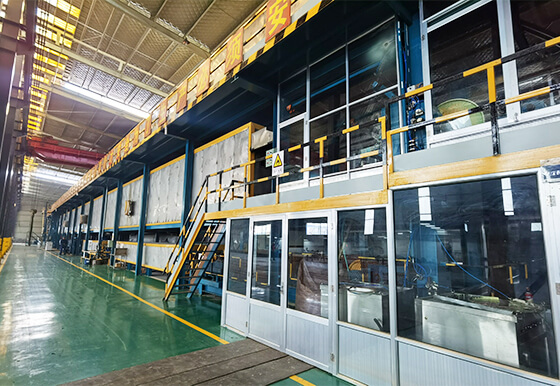
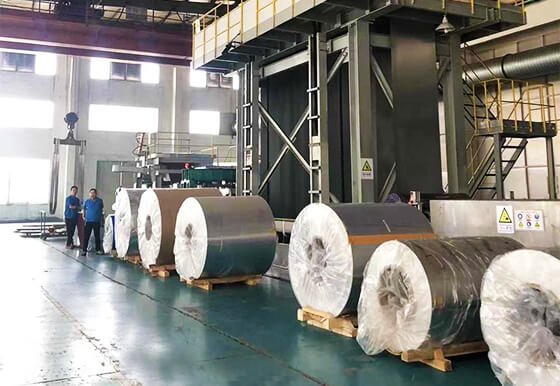
For the past decade,Dingang has been growing rapidly in the industry,owning two plants of 160,000㎡ with eight large automatic roller coating lines for aluminum and six for steel products.Over 700 skillful workers.In addition,we have stretching-bending rectifier,cleaning drawbench,embossing,cross-cutting and vertical slitting machines.

With near 20 years of professional metal coating experience,we have the ability to coat PE,PVDF and epoxy coating.We are also one of the few coating applicators that can replicates natural materials such as stones,marble,wood,terracotta,concrete and even rusted copper on the surface of metal with paint.

Production Line

Registered Capital: 15 million US Dollar (Equivalent to 95 million Yuan).
Company Size: Covers an area of 160,000㎡.
Equipment and technology: Introducing Siemens electric control system in production lines.
Productive capacity: Eight pre-painted aluminum lines with output 150, 000 tons/year.Six full automatic color coating steel production lines with output of 450,000 tons/year;

OEM/ODM

No matter clients need us to make OEM or ODM,that's available to us.
Many clients from Euro,America,Canada,Austrila and other developed countries who hope us to produce the products with their own brand.We are very willing to cooperate with them and meet their's requirement.
Trust us and cooperate with us,our product and servise would make you satisfied.

R&D

Dingang still believes the driving force of company's long term development comes from the cultivation of talents.That's why we pay huge attention to the cultivation of scientific and technological personnel.Every year we would recruit graduates from universities.
Now our group has more than 700 employees in our two factories.Most of them with diplomas over university's degrees.Including 38 engineers and 170 technician.

Education Of Degree

Number

Percentage

Master And Above

42

6%

Undergraduate

178

25%

Junior College

255

36%

Technical And Skill School

135

19%

Others

92

13%

In addition,Dingang annually spends more than 12% of total sales on research and development and technical personnel advanced study at home and abroad.

Cooperation Process

  • Step.1

    Enquiry Us With Spec Requirements
  • Step.2

    Offer Client With Quotation And Sample
  • Step.3

    Quotation & Sample Approved By Client
  • Step.4

    Payment Way & Lead Time Confirmed
  • Step.5

    Sales Contract Signed (Order Confirmed)
  • Step.6

    Bulk Production & Shipping Issue
  • Step.7

    Bulk Goods Delivering
    bg4FAQ  bg4

Frequently Asked Questions

We have compiled the most frequently asked questions about our color coated aluminums here for your convenience, but please feel free to contact us if you have any additional questions.

Composite Aluminum Foil FAQ

  • Q Can you provide samples?

    A Yes.
  • Q How do you ensure product quality?

    A
    We implement strict quality control throughout the production process, including:
     
    Raw material inspection
    Online production monitoring
    Final product testing (barrier, sealing strength, thickness, etc.
  • Q What printing options are available?

    A We offer high-quality gravure printing, supporting up to 10 colors or more depending on requirements. Matte, glossy, and metallic finishes are available to enhance brand presentation.
  • Q Can you customize the material structure for specific applications?

    A Yes.
  • Q What thickness options do you offer?

    A Aluminum foil thickness typically ranges from 6μm to 30μm, while the total laminate thickness can be customized depending on the application. We can tailor both individual layer thickness and overall structure.
  • Q What is composite aluminum foil?

    A Composite aluminum foil is a multi-layer laminated material that combines aluminum foil with plastic films (such as PET, BOPP, PE, or Nylon) and sometimes paper. It is designed to provide excellent barrier properties, mechanical strength, and heat sealability for various packaging and industrial applications.

Factory FAQ

Consult Us To Get Your Customized Aluminum Solution

We help you avoid the pitfalls to delivery the quality and value your aluminum  need, on-time and on-budget.

Products

Application

Quick links

Follow Us

Contact Us

    joey@cnchangsong.com
    +86-18602595888
   Building 2, Zhixing Business Plaza, No.25 North Street, Zhonglou District, Changzhou City, Jiangsu Province, China
    Chaoyang road, Konggang economic development area, Lianshui, Huai'an city, Jiangsu,China
© COPYRIGHT 2026 CHANGZHOU DINGANG METAL MATERIAL CO., LTD. ALL RIGHTS RESERVED.