PPAL
DINGANG
| Availability: | |
|---|---|
| Quantity: | |
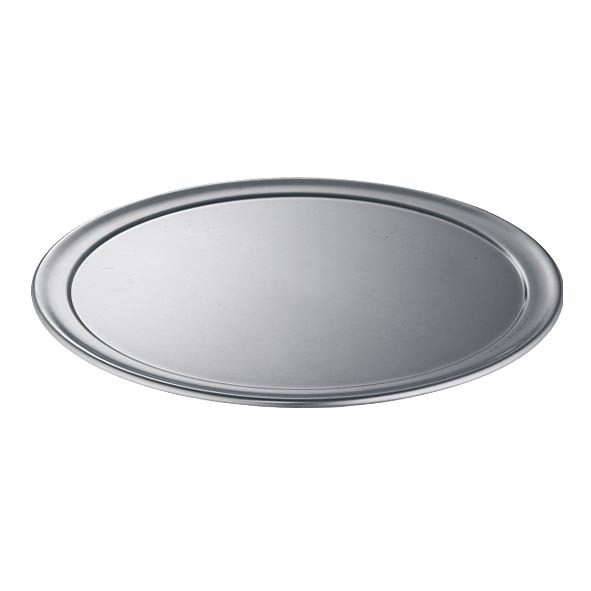
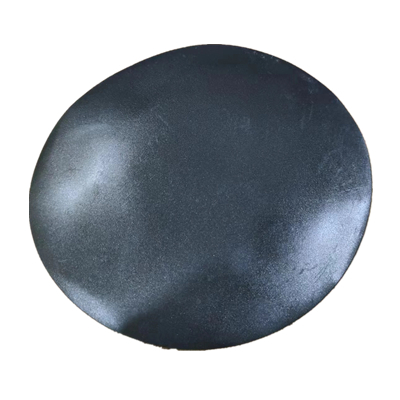
AA1060 aluminum circle discs are round cookware blanks produced from commercially pure aluminum containing at least 99.60% aluminum. The material combines high formability, good thermal conductivity, low density and corrosion resistance, making it suitable for cookware manufacturers using stamping, drawing, spinning and related forming processes.
This product can be supplied in different tempers and surface conditions according to the finished cookware geometry. O, H12 and H14 tempers are suitable options for different forming depths, while harder tempers can be evaluated where greater finished-part stiffness and lower deformation are required.
Standard circle diameters range from 100 mm to 800 mm, with common sizes including 300 mm, 400 mm, 500 mm, 600 mm and 800 mm. The current punched-disc production range supports thicknesses up to 1.20 mm, with custom diameter, temper, color and coating specifications available subject to production confirmation.
Request a 1060 Cookware Disc Quote Request Samples & Color Options
AA1060 is a commercially pure aluminum grade containing at least 99.60% aluminum. Its low alloy content provides high ductility and good thermal conductivity, making it a practical substrate for cookware bodies that need to be formed from flat circular blanks.
Cookware production places substantial strain on the aluminum blank. Correct alloy, temper, disc diameter, edge condition and material consistency help reduce the risk of tearing, excessive earing and uneven wall thickness during drawing or spinning.
For deep pots or components requiring substantial deformation, softer tempers are generally preferred. For shallow-drawn cookware, lids or components requiring more finished stiffness, H12 or H14 can be evaluated according to the forming process.
1060 aluminum has high thermal conductivity compared with many common structural metals. This makes it suitable as a base material for pots, pans and other cookware where rapid heat transfer through the aluminum body is required.
Aluminum's low density helps reduce finished cookware weight and simplifies blank handling, press feeding and downstream fabrication compared with heavier metal substrates.

| Parameter | Specification |
|---|---|
| Primary Alloy | AA1060, minimum 99.60% aluminum |
| Other Available Alloys | 1050 / 1100 / 3003 / 3005 / 3105 subject to application |
| Temper | O / H12 / H14; harder tempers such as H18 or H24 available where suitable |
| Diameter Range | 100 mm – 800 mm |
| Common Diameters | 300 / 400 / 500 / 600 / 800 mm |
| Current Punched Thickness Range | Up to 1.20 mm |
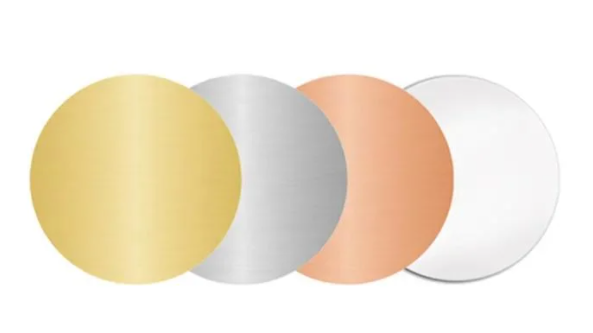
| Surface Options | Mill finish / Prepainted / Custom color coating according to application |
| Typical Processing | Stamping / Deep Drawing / Spinning / Cutting / Flanging |
| Typical Cookware Applications | Cooking Pots / Pans / Lids / Cookware Components / Kitchenware |
| MOQ | 1000 kg per size |
| Typical Lead Time | Within 30 days, subject to specification and order quantity |
| Payment Terms | T/T or irrevocable L/C at sight |
Specification note: The correct temper and blank size depend on cookware diameter, forming depth, wall profile, corner radius, number of drawing stages and final surface treatment. For repeat production, finished-part drawings and existing tooling data are recommended for material confirmation.
Send Your Diameter, Thickness & Temper
O temper is fully annealed and provides the highest ductility among the common 1060 cookware tempers. It is generally the preferred starting condition for deeper pots, multi-stage drawing and components requiring substantial plastic deformation.
H12 and H14 provide greater initial stiffness than O temper and can be suitable for shallow drawing, spinning, cookware bottoms, lids and other parts where the forming severity is lower and additional shape retention is useful.
Harder tempers offer increased strength but reduced ductility. They should therefore be selected only when the finished geometry, bend radius and forming method are compatible with the lower elongation.
Mill-finish 1060 circles are suitable where the cookware manufacturer performs forming first and then applies polishing, anodizing, ceramic, non-stick or other finished surface treatments downstream.
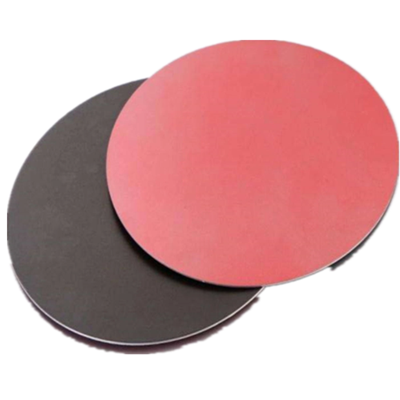
Prepainted circles can be supplied where a flexible coating is required before suitable stamping or forming. The coating must be matched to the drawing ratio, bend radius and final use because severe deformation can place substantial strain on the paint film.
A general PE or PVDF decorative coating should not automatically be treated as a direct food-contact or high-temperature cooking coating. If a coated face will contact food, the exact coating formulation, food type, contact temperature, duration and destination-market requirements should be confirmed separately.
The following values are reference targets from the available prepainted aluminum coating system. They are most relevant to decorative or non-direct-food-contact surfaces. Exact test standards, specimen preparation and acceptance criteria should be confirmed for the ordered coating before production.
| Test Item | PVDF | PE and Other Coatings | |||
|---|---|---|---|---|---|
| With Varnish | Without Varnish | ||||
| Reference | Reference | Reference | |||
| Paint Film Thickness, μm | ≥22 | ≥30 | ≥18 | ||
| Gloss Tolerance | Gloss ≥80 units: ±10 units | ||||
| Gloss 20–80 units: ±7 units | |||||
| Gloss <20 units: ±5 units | |||||
| Pencil Hardness | ≥1H | ||||
| Abrasion Resistance, L/μm | ≥5 | — | |||
| T-Bend | ≤2T | ≤3T | |||
| Impact Strength | 50 kg·cm without visible paint loss or cracking under the confirmed test method | ||||
| Adhesion Class | ≥1 | ||||
| Boiling Water Resistance | No visible change under the confirmed test conditions | ||||
| Chemical Resistance | Acid Resistance | No visible change under the confirmed test conditions | |||
| Alkali Resistance | No visible change under the confirmed test conditions | ||||
| Oil Resistance | No visible change under the confirmed test conditions | ||||
| Solvent Resistance | ≥70 | ≥50 | |||
| Scrub Resistance | ≥10,000 cycles without visible change under the confirmed method | ||||
| Dirt Resistance | ≤15% | — | |||
| Salt Spray Resistance | ≥2 class | — | |||
Coating note: These coating values should not be used as evidence of food-contact suitability. Where a coating will become an interior cooking or food-contact surface, the applicable coating specification and regulatory documentation must be confirmed independently.
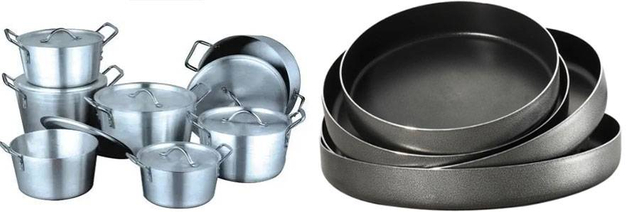
1060 aluminum circles can be formed into light- and medium-gauge pot and saucepan bodies. O temper is preferable where greater drawing depth is required, while the blank diameter should include the forming and trimming allowance required by the finished cookware geometry.
For shallower cookware forms, 1060 circles can be stamped or spun into pan bodies and related components. Final stiffness depends on thickness, temper, wall geometry and any bonded or reinforced bottom construction.
H12 or H14 circles can be evaluated for lids and shallow-formed components where high deep-drawing elongation is less critical and greater finished-part rigidity is useful.
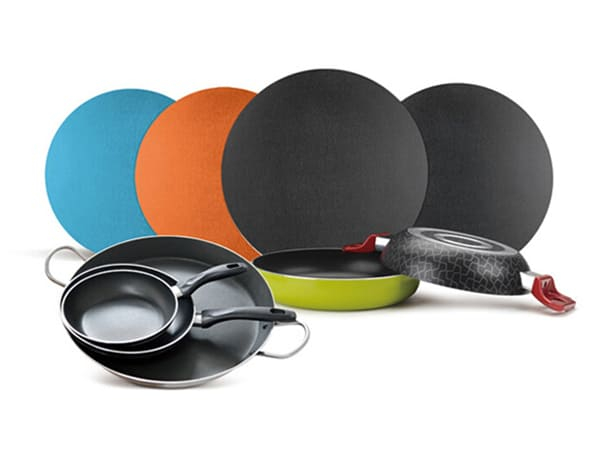
Prepainted circles can be used for suitable decorative exterior components where the selected coating is compatible with forming, curing temperatures, cleaning chemicals and the final product design.
Aluminum coil selection → thickness and surface inspection → leveling → circle blanking or cutting → temper adjustment or annealing where required → edge inspection → optional surface treatment or coating → dimensional inspection → packing.
For established cookware production lines, controlling blank diameter, thickness, temper, edge burr and batch consistency helps maintain repeatable press settings and reduces variation during drawing and spinning.


Aluminum cookware bodies are comparatively lightweight, which can improve handling for both cookware manufacturers and end users.
1060 aluminum transfers heat efficiently through the cookware body. Final heating uniformity also depends on pan geometry, base thickness, heat source and any bonded induction or multilayer base construction.
Round aluminum blanks can be stamped, spun, drawn, trimmed and flanged into many cookware shapes. This makes the circle format convenient for high-volume cookware manufacturing.
After forming, suitable 1060 cookware bodies can undergo polishing, anodizing or application of compatible decorative and cookware coating systems according to the manufacturer's production route.
Aluminum is recyclable and production scrap generated during circle blanking and trimming can be recovered through appropriate recycling streams.
Alloy and temper verification
Thickness measurement
Diameter and roundness inspection
Flatness inspection
Edge burr and edge-damage inspection
Surface inspection for scratches, dents, oil stains and oxidation
Coating thickness and adhesion testing where prepainted material is specified
Forming trial where required for demanding cookware geometry
Request Technical Data & Samples
For accurate pricing and technical review, please provide alloy, temper, thickness, disc diameter, quantity, cookware application, forming process and required surface condition.
For deep-drawn pots, also provide the finished pot diameter, depth, corner radius, number of drawing stages and trimming allowance where available. For prepainted circles, specify coating type, color, coated side and whether the coated surface will contact food.
Get a Custom Cookware Circle Proposal
The current product range supports diameters from 100 mm to 800 mm. Common sizes include 300 mm, 400 mm, 500 mm, 600 mm and 800 mm, and custom diameters can be discussed.
For this product line, the current punched-disc range supports thicknesses up to 1.20 mm. Please provide the exact diameter and thickness combination for production confirmation.
O temper is generally preferred for deeper drawing because it provides the greatest ductility. H12 or H14 may be suitable for shallower forming where additional finished stiffness is required.
Yes. Small samples can be discussed for checking surface quality, color and coating condition before mass production. For forming validation, buyers should specify the required thickness, temper and diameter.
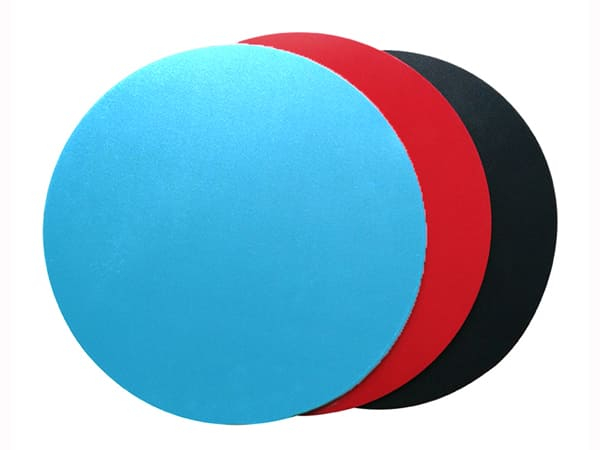
Yes. Prepainted aluminum discs can be produced according to an agreed color reference or approved physical sample, subject to coating-system and order confirmation.
They can be formed when the coating has sufficient flexibility for the intended geometry. Draw ratio, tooling, lubrication, coating thickness and bend severity should be verified before volume production.
Direct food-contact suitability cannot be determined from the coating family name alone. The exact formulation, intended food type, contact temperature, duration and destination-market requirements must be confirmed for the specific coating system.
Excessive burrs, edge damage or irregular blanks can contribute to cracking during drawing, interfere with centering and increase tooling wear. Controlled blanking and edge inspection improve repeatability in press production.
Please provide alloy, temper, thickness, diameter, surface or coating requirement, quantity and destination. For cookware production, the finished pot dimensions and forming method are also useful for confirming the material specification.

If you manufacture cooking pots, pans, lids or other formed kitchenware, send us your required diameter, thickness, temper, surface condition, coating requirement and purchase quantity. Our technical sales team can review the specification and prepare a quotation and sample proposal.
Products
Application
Quick links
Contact Us